

Nordic Runes - Meaning
Nordic Runes – How to Understand Ancient Symbols and Find a Part of Yourself in Them
Hi! My name is Mateusz and today I want to take you on a long, interesting, and (I hope) captivating journey through the world of Norse runes. I bet that since you've found this guide about what it's like Nordic runes meaning, Then you already know a little about their existence. But do you know the history behind each symbol? Do you know how ancient warriors and priestesses used them in magical rituals, and how we—modern seekers of spirituality—can apply them to everyday life? Or perhaps you've heard that runes can be used for divination, to adorn talismans, or to create protective amulets?
I myself became drawn to runes quite recently. When I first saw them in the form of pebbles carved with symbols, I immediately felt drawn to them. I began to delve deeper into the subject and, along the way, became immersed in Norse myths, stories about Odin, Frey, and Freyja. And so my adventure began. Today I want to tell you, in a less formal, more informal way, what they actually are. Nordic runes, why they are used and what each of the 24 characters collectively called the Elder Futhark symbolizes.
Make yourself a cup of tea and sit comfortably, because you're about to get a good dose of knowledge about symbolism of Nordic runes (And I hope you enjoy reading it too.) Ready? Let's get started!
1. Where did these runes come from?
Let's travel for a moment to the cold regions of Scandinavia, around the 2nd–8th centuries A.D. Norse runes are an ancient writing system used since the 2nd century. n.e. – at that time Germanic peoples and Scandinavians used a writing system called runes until the 15th century, when they gradually gave way to the Latin alphabet. Their alphabet – called the Elder Futhark, or Elder Futhark – it had 24 characters that formed a coherent runic alphabet. The name comes from the first letters in the order: F, U, Th, A, R, K (Fehu, Uruz, Thurisaz, Ansuz, Raido, Kenaz).
Interesting fact: the word "rune" itself means "secret" or "whisper" - which perfectly captures the spirit of this mysterious Viking writing. Historians speculate that the runes were inspired by Etruscan and Greco-Latin writing, although they developed a completely unique character of their own.
For the ancient Scandinavians, runes had not only a utilitarian function (like the Latin alphabet in our country), but also magical and ritualistic ones. It was believed that carving runes into stone, metal, or wood invoked specific energies. If someone wanted protection, they could carve a specific symbol on a battle axe. If fertility was a concern, they would reach for another rune and place it strategically in the home. This wasn't a simple "alphabet"—it was a set of symbols corresponding to nature, deities, and the forces of the universe.
2. Runes in practice – ancient times and today
Long ago, runes were used to record grave inscriptions, decorate weapons, and for divination. Their practical applications extended beyond magic, encompassing everyday communication and marking the ownership of objects. Runes were written on hard materials such as wood or stone, creating so-called "runes." rune stones, which were used to commemorate important events. Priests and priestesses (named differently depending on the culture) could "read" the future by scattering dice with engraved symbols – it was from the Viking Age that the tradition of runic divination originated, a tradition that still fascinates many spiritual seekers today.
Today, in the 21st century, few people use runes for ordinary writing (unless they're a fan of historical reenactment). Modern use of runes primarily involves historical research and neo-pagan practices. However, the signs themselves have not faded into oblivion.On the contrary, many people, myself included, eagerly return to them as a tool for self-development and spiritual reflection. Some might say, "That's just superstition!" I reply, "What harm will it do to try if it can boost your self-confidence or remind you of your inner strength?" In my experience, runes are most effective when you treat them with respect, but also with common sense—just like talismans, prayers, or affirmations. You are the driving force behind the changes in your life, and runes can accompany you and strengthen your intentions.
3. How to read individual runes?
Now we get to the point – what it actually is the meaning of the runes And how to read each of them? Below you'll find 24 signs of the Elder Futhark. I'll devote some space to each one – explaining what they symbolize, what energies they bring, and in what situations they might be useful. Of course, individual runes can be interpreted in many ways, depending on the tradition and teacher – a rune associated with one characteristic in one source may have a slightly different shade of meaning in another, much like tarot cards. I'm giving you my own vision, based on reading various sources and my own practice. Remember to trust your own intuition as well – if you feel that, for example, Fehu speaks to you in a different way than what I've written, that's okay too.
3.1. Fehu (ᚠ) – Abundance and Success
Basic associations: wealth, property, financial prosperity, development.
Mythological background: In ancient times, the word "fehu" referred to cattle, which for the northern peoples signified specific wealth (the more animals, the greater the wealth). More specific meanings of runes of this type included wealth, strength, and wisdom.
As I understand it: Fehu symbolizes wealth in the broadest sense—it says, "You have resources, use them wisely." It can refer to money, skills, or social contacts. If you're struggling with a lack of funds, Fehu reminds you to be proactive and not be afraid to demand fair payment for your services. If you're reading runes and see Fehu, it's sometimes a sign that wealth—material or immaterial—is just around the corner.
3.2. Uruz (ᚢ) – Strength and Perseverance
Basic associations: aurochs (wild cattle extinct long ago), the power of nature, health, vitality.
Mythological background: Uruz embodies the unbridled power of ancient creatures.
As I understand it: When I need extra energy to spur me on, Uruz is like a supportive friend. You can also treat it as a symbol of recovery—a reminder that you have within you a primal power to regenerate. Sometimes you just need to let it surface.
3.3. Thurisaz (ᚦ) – Protection and Breakthrough
Basic associations: giants (Thurs), the power of chaos, violence.
Mythological background: Giants in Norse myths weren't always evil, but they often stood in opposition to the gods. They had to be negotiated with or fought.
As I understand it: Thurisaz is a rune that can "shatter" old patterns and unleash powerful energy within us. It is sometimes associated with aggression, so I use it with caution. However, it works great as one of protective runes – a shield and tool for quick change in life.
3.4. Ansuz (ᚨ) – Wisdom and Communication
Basic associations: god Odin, word, inspiration, secret knowledge.
Mythological background: is a rune directly associated with the god Odin, who sacrificed much to learn the secret of the runes - one of the central figures of Norse mythology.
As I understand it: Ansuz is like inspiration that suddenly makes you see things with clarity. It develops communication skills and helps you learn, write, and speak to others.When I feel creative block, I reach for Ansuz to open my mind to fresh ideas.
3.5. Raido (ᚱ) – Journey and Change
Basic associations: movement, road, movement, but also rhythm and harmony.
Mythological background: In many myths, the journey meant a spiritual transformation – Odin hanging on the tree of Yggdrasil, Sigurd seeking knowledge...
As I understand it: Raido is a rune of the road, so if you're facing a lifelong journey—whether it's a real journey or a metaphorical "setting off" toward new goals—it's worth having with you. It inspires continuous growth and indicates that stagnation isn't the best path.
3.6. Kenaz (ᚲ) – Creativity and Inner Light
Basic associations: torch, flame, illumination, knowledge.
Mythological background: In Nordic culture, the light of fire has always been associated with warmth and the passion for creation.
As I understand it: Kenaz lights a spark that can help you create works of art or solve a problem in a creative way. I feel like it's a kind of torch rune: it illuminates the darkness of ignorance and brings to light ideas you didn't even know existed.
3.7. Gebo (ᚷ) – Gift and Reciprocity
Basic associations: gift, exchange, partnership, relationship.
Mythological background: In Nordic societies, the principle of reciprocity was important – you get something, but you also give something in return.
As I understand it: Gebo is a rune of harmony between people. Whether you want to build a strong relationship, friendship, or work relationship, this rune helps you remember that mutual generosity (emotional and material) is the key to success.
3.8. Wunjo (ᚹ) – Joy and Fulfillment
Basic associations: happiness, harmony, pleasure in life.
Mythological background: Wunjo appears as the moment when hardship ends and the celebration of victory and satisfaction begins.
As I understand it: this is one of my favorites – true rune of joy. When Wunjo appears, it's a signal to catch your breath and see the positive aspects of everyday life. Life isn't all about racing – sometimes it's worth filling yourself with gratitude and enjoying a feast with your loved ones.
3.9. Hagalaz (ᚺ) – Perseverance in Change
Basic associations: hail, storm, unexpected difficulties, but also purification.
Mythological background: Hail could destroy crops, but it was also considered a divine sign, shaking up what needed to change.
As I understand it: Hagalaz is a transformative rune. Its appearance can be unpleasant (like a sudden, devastating storm), but then the sun comes out, revealing that what emerged from the hailstorm is healthier and stronger. When you feel your life is in chaos—in the face of adversity—be assured, Hagalaz can motivate you to face change.
3.10. Nauthiz (ᚾ) – Patience and Determination
Basic associations: scarcity, necessity, inner discipline.
Mythological background: In Norse, the word referred to "need." Hence, this rune is sometimes associated with "the crisis that triggers ingenuity."
As I understand it: Nauthiz reminds us that even if something is missing, it can be turned into an asset. Need something? Consider whether you can develop it yourself. In difficult times, this rune strengthens character.
3.11. Isa (ᛁ) – Calmness and Composure
Basic associations: ice, stop, stillness, concentration.
Mythological background: Winter and ice in Scandinavia are no joke – they give you a hard time, but they also allow nature to calm down and regain its strength.
As I understand it: When life is too chaotic, Isa says, "Take a pause. Cool down. Stop the mad rush for a moment." A good rune when someone feels overwhelmed by too much emotion. Isa doesn't solve problems, but it allows one to gain perspective.
3.12. Jera (ᛃ) – Cyclicity and Growth
Basic associations: year, harvest, nature in cycles, patience.
Mythological background: Agriculture in ancient societies was fundamental—people waited for the moment of sowing, growth, harvest, and rest. Some believed that runes like these predicted the weather for sowing and harvesting.
As I understand it: Jera teaches us: everything has its time; you can't rush certain processes. If working on your project seems to drag on forever, Jera offers hope that you will eventually reap the rewards. But remember – just like in farming: if you don't sow, you don't reap.
3.13. Eihwaz (ᛇ) – Balance and Transition
Basic associations: yew tree, immortality, transformation, merging dimensions.
Mythological background: For the Vikings, the yew was a sacred tree, symbolizing the power of survival despite unfavorable conditions.
As I understand it: Eihwaz supports you in moments of transition. When you know something old is ending and something new is about to be born, this rune helps you maintain peace during the "crossing." It's an inner pillar you can lean on during life's upheavals.
3.14. Perthro (ᛈ) – Mystery and Opportunity
Basic associations: fate, destiny, a cup hiding secrets, surprise.
Mythological background: There are many interpretations here – some see it as a bowl of fate, others see it as something like “dice” thrown by the gods to predict the future.
As I understand it: Perthro suggests that not everything in life is predictable. Sometimes it's worth relying on intuition or taking risks. A good rune when you feel your life needs a touch of magic and the discovery of new paths.
3.15. Algiz (ᛉ) – Protection and Intuition
Basic associations: elk or deer antlers, arms stretched upwards, contact with the divine.
Mythological background: the symbol of the antenna that connects man with higher powers, while protecting him – one of the most famous signs of protection in the entire alphabet.
As I understand it: Algiz is a shield rune, one of the most powerful protective runes. It protects against negative influences and also sharpens your intuition so you can detect "bad vibes" yourself. When I feel uneasy in a new environment, I imagine Algiz creating a protective barrier around me.
3.16. Sowelo (ᛋ) – Light and Success
Basic associations: full sun, victory, brightness, joy of life.
Mythological background: In Norse myths, the sun is a source of energy and warmth, it illuminates darkness and gives hope – it brings positive energy to every situation.
As I understand it: Sowelo is a symbol of triumph over obstacles and enlightenment. If you're struggling with difficulties and Sowelo suddenly appears, it's like winning a battle. It reminds us that there's an inner sun within each of us that deserves to be awakened.
3.17. Tiwaz (ᛏ) – Courage and Justice
Basic associations: god Tyr, honor, fighter, moral principles.
Mythological background: Tyr sacrificed his hand to neutralize the wolf Fenrir – an act of heroism and self-sacrifice, one of the most famous stories in Norse mythology.
As I understand it: Tiwaz is a true rune of courage – it is useful to all who stand up for a just cause.This rune reminds us that sometimes we must lose something to achieve a greater good. It helps us when we need to strengthen our resolve and remain true to our principles, even in the face of adversity.
3.18. Berkana (ᛒ) – Growth and Rebirth
Basic associations: birch, feminine energy, beginning of life, motherhood, regeneration.
Mythological background: spring, greenery, new blood in nature – all this was associated with the goddesses of fertility.
As I understand it: Berkana is like a warm spring rain that causes dormant seeds to sprout. It is the rune of new beginnings – whether you want to start a new project, enhance your creativity, or introduce a gentle transformation into your life, Berkana is here to support you.
3.19. Ehwaz (ᛖ) – Movement and Cooperation
Basic associations: horse, loyalty, speed, joint action.
Mythological background: In Viking culture, the horse was a warrior's companion and a symbol of efficiency (fast movement, but also a bond with the animal).
As I understand it: Ehwaz is useful when planning a move, a trip, a job change, or when you need to collaborate better with others. This rune emphasizes that more can be accomplished in a pair (or team) than alone.
3.20. Mannaz (ᛗ) – Humanity and Consciousness
Basic associations: human being, cooperation, awareness of "I" and "we".
Mythological background: a human rune, often used to emphasize unity in a group and the role of man in the cosmos.
As I understand it: When you feel like you want to better understand yourself in your relationships with others, Mannaz offers a tip: "Remember, you don't live in a vacuum; you influence people, and they influence you." He also encourages you to learn about your own capabilities and limitations.
3.21. Laguz (ᛚ) – Fluency and Intuition
Basic associations: water, river, moon, emotions, subconscious.
Mythological background: Water in Norse myths was the key to other worlds (e.g. Mimir's well of knowledge).
As I understand it: Laguz reminds you to flow with your intuition, rather than stubbornly pushing against it. A good rune when learning to meditate, listen to your dreams, or listen to your inner voice. It helps you find depth in your feelings.
3.22. Ingwaz (ᛝ) – Potential and Creation
Basic associations: god Frej (Ing), fertility, seed, power of germination.
Mythological background: Frej was the god of harvest and everything related to profits and stable development in nature.
As I understand it: Ingwaz says, "Within you lies the seed of an idea, a project, a feeling, and if you nurture it properly, something beautiful will grow." The rune strengthens the creative process and also helps initiate a new chapter.
3.23. Othala (ᛟ) – Heritage and Security
Basic associations: home, family, inheritance, roots, homeland.
Mythological background: Othala was associated with land ownership and ancestral identity – a symbol of heritage passed down from generation to generation.
As I understand it: When you need to strengthen your connection with your ancestors or feel like you belong somewhere, Othala provides a sense of security and stability. She says, "You are not alone—generations stand behind you, and you are building the foundation for the generations to come."
3.24. Dagaz (ᛞ) – Light and Transformation
Basic associations: dawn, new day, awakening, radical change.
Mythological background: the moment when night gives way to day symbolizes a sudden revelation.
As I understand it: Dagaz is a rune of breakthrough.When everything seems shrouded in darkness, dawn suddenly arrives and changes your perception of reality. If you're facing a life-changing decision, Dagaz will give you courage and point you in the direction of the light.
4. How to work with runes on a daily basis?
You're probably wondering, "Okay, I know the symbolism, what's next?" Here are some of my tried-and-true (and simple) methods:
Choosing a rune for the day. In the morning, before the hectic pace of work has yet to hit you, take a set of runes (it could be a set of pebbles, sticks, or cards). Pull out one rune, close your eyes, and ask: "What do I need today? What energy will support me?" Read the sign and try to observe its power throughout the day.
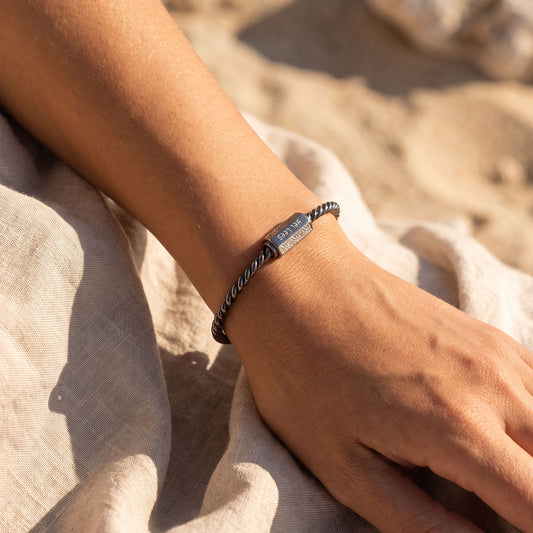
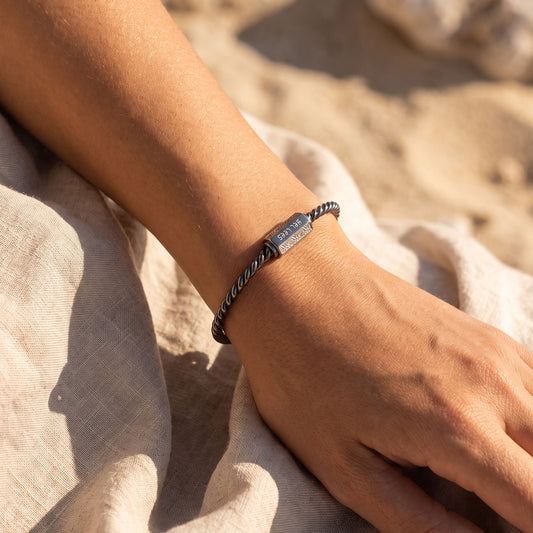
Amulet or talisman. You can choose a specific rune (or a combination of two or three) and engrave it on a medallion, keychain, or bracelet. For example, I often wear Algiz when I'm going somewhere unfamiliar because it makes me feel more confident. I don't consider it a magical spell, but rather a pleasant reminder: "Be careful, but stay calm."
Divination with runes. Those who prefer a more magical approach can spread the runes like tarot cards: ask a question and draw a few symbols. But remember, runes don't tell you what will definitely happen—rather, they offer suggestions about the energies at work around you and what you can do about them.
Meditation. Simply sit quietly, gaze at the shape of a given rune, and let your thoughts flow. Imagine that this shape is speaking to you, telling you what's on your heart. It sounds a bit abstract, but it's a great way to deepen your understanding of runes.
Creative notes. You can keep a runic journal. For example, you choose Ingwaz, jot down your associations with what happened in your life that day, and then check to see if these events somehow relate to the rune's symbolism.
5. Runes in jewelry – why do we so willingly carry them with us?
This is a topic that piqued my interest once I began to dig deeper. Runes have been inscribed on everyday objects, including jewelry, since Viking times—they were carved onto rings, pendants, and weapons, believed to bring good luck and protection to the wearer. This tradition has survived to this day: modern runes are very popular in jewelry and tattoos because they combine simplicity of form with powerful symbolic meaning.
Personally, I understand this phenomenon – by carrying a symbol that means something to us (a rune, but it could just as easily be a natural stone or other talisman), we have a constant reminder of the intention we want to strengthen within ourselves. If this topic interests you, too, it's worth looking for jewelry in which the symbolism – runic or otherwise – is well-thought-out, not forced.
6. The questions I get asked most often
Are runes a religion?
No, runes themselves aren't a religion. They're a tool. You can be a Christian, an atheist, a Norse believer, or no one at all, and still draw inspiration from runes.
Do runes work like curses and spells?
Let's not go to extremes. In ancient times, runes were sometimes used to cast spells, but this is more a matter of the user's intention than the rune itself. A rune is a symbol, and you decide whether you want to project positive or negative energy.
How to choose "your" rune?
Intuition is the key. Perhaps you're drawn to a shape or a name. Perhaps you feel that at a given moment in your life you want to strengthen your strength (Uruz) or begin a new phase (Berkana). Sometimes a simple test is enough: look at the list of runes and see which one catches your eye first.
What is the difference between the Elder Futhark and the Younger Futhark?
The Elder Futhark, which we are concerned with here, is the oldest, 24-character version of the runic alphabet, used until approximately the 8th century. Later, as languages changed, the Younger Futhark arose – simplified to 16 characters, and used as early as the Viking Age.
Which runes are considered the strongest protective runes?
The most frequently mentioned are Algiz and Thurisaz – both are associated with protection against negative influences, although they act slightly differently: Algiz as a shield and sharpened intuition, Thurisaz as a force that breaks through what is harmful.
Are runestones and runes on jewelry the same thing?
Not quite. Runic stones are usually large boulders with inscriptions carved into them, erected to commemorate important events or people—akin to monuments. Runes on jewelry are a much smaller, personal form of the same symbol, worn close to the body.
7. A few words from me at the end
In writing this guide, I wanted to show that runes don't have to be reserved for initiated "masters of magic." It's an incredibly beautiful system of symbols in which everyone can find something for themselves—inspiration for self-improvement, support in difficult times, motivation to achieve goals, or at least an interesting starting point for meditation.
Many people say to me, "Mateusz, these are just symbols. Just the shape of the letters. Aren't you going too far with this whole philosophy thing?" And I reply, "Have you ever wondered why some people wear a cross and others a decorative letter 'A' around their necks? Because symbols have meaning to us. But Norse runes have this ancient, magical flavor that stimulates the imagination and a belief in the multiplicity of possibilities."
If, while reading about runes, you felt that some resonated more with you, perhaps you should try devoting more attention to them. Focus on one, read about it, delve into the myths, and try to feel its energy in your daily life. Just remember: don't expect miracles if you don't take action yourself. Runes aren't Aladdin's lamps that grant wishes. I see them more as companions on our journey—reminding us of courage, joy, the need for growth, and so on.
End
You've (hopefully) reached the end of my rather lengthy guide. Together, we've explored the history of runes, their mythological contexts, and practical tips. Discussing 24 runes could probably take even longer, as each rune holds so many nuances. But I believe these basics will help you begin or deepen your adventure with Norse symbols.
Finally, I wish you to choose a rune (or set of runes) that will support you on your path, whatever that means in your life. May Fehu bring you abundance, Uruz – strength, Wunjo – joy, and Algiz – protection. And if chaos overwhelms you, Hagalaz will remind you that after the storm, the sun always rises.
Thank you for listening to my stories. If you have any questions, feel free to ask them (either in your own mind or to someone who also enjoys the subject of runes). Remember: what matters is an open mind and a heart ready for new experiences. Perhaps the runes will show you something you haven't yet discovered within yourself. Good luck, and see you in future stories about ancient beliefs and spiritual paths.
Skál! – as the ancient Vikings would say. May the runes be with you!






1 comment
Mega ciekawe. Dziękuję !