Black Tourmaline – Meaning, Properties and How to Wear It
Black tourmaline is a popular gemstone among jewellers and collectors, and one of the most frequently chosen stones in protective jewellery. It is a natural dark mineral that tradition associates with grounding and setting boundaries. In this article you will find everything worth knowing about tourmaline: what it is, its physical properties, where it comes from, what it symbolises in tradition, how to wear it every day and what to pair it with. It is written for people who are just starting out with natural stones, choosing their first bracelet or pendant, or simply curious about what this stone means in tradition. It will help you tell mineralogical facts apart from symbolism and choose jewellery that suits your style and intention. If you are wondering which zodiac sign tourmaline belongs to, how to recognise a genuine stone or how to care for it, you will find links to detailed guides further on.
Table of contents
- What is tourmaline?
- Tourmaline through history
- Tourmaline: physical properties
- Black tourmaline compared with other natural stones
- Where black tourmaline comes from
- Black tourmaline: meaning and symbolism
- Tourmaline: why people wear it
- How to wear black tourmaline
- Black tourmaline: what to pair it with
- How to choose black tourmaline jewellery
- Black tourmaline bestsellers
- Black tourmaline in tensor jewellery
- Tourmaline and your daily intention
- What to keep in mind when wearing it
- Tourmaline and the zodiac
- Natural tourmaline: how to recognise it
- How to care for tourmaline
- Black tourmaline: myths and facts
- FAQ: frequently asked questions
What is tourmaline?
Tourmaline is a natural stone from the silicate group, more precisely an aluminium borosilicate with a complex chemical composition. Its name comes from the Sinhalese word "turmali", used in Sri Lanka for the multicoloured stones found in river sand. Tourmaline occurs in many colours, depending on which trace elements end up in its structure. It crystallises in the trigonal system, most often as long, elongated prisms with a triangular cross-section. It forms mainly in granite pegmatites, rocks that take shape from residual magma melts rich in trace elements, which explains its wide range of colours even within a single deposit.
Black tourmaline (schorl): the most common variety
Black tourmaline, known as schorl, is the most common variety of this mineral in the world. It owes its colour to a high iron content in its crystal structure. It is opaque, has a matte or glassy lustre and shows the characteristic lengthwise striations on its crystals, which are especially visible in raw, uncut stones.
Other varieties of tourmaline
Besides black tourmaline, nature also produces pink (rubellite), green (verdelite) and multicoloured varieties, including watermelon tourmaline, which has a green outer layer and a pink core. Each variety owes its colour to different trace elements, such as manganese, lithium or chromium. A particularly prized variety is Paraíba tourmaline, a blue-green stone discovered in 1989 in the Brazilian state of Paraíba, which gets its remarkable colour from trace amounts of copper. It is one of the rarest and most expensive varieties of tourmaline in the world.
Tourmaline through history
Tourmaline has been known and used in jewellery for centuries, although for a long time it was confused with other gemstones because of their similar colours. It reached Europe on a larger scale in the 18th century through Dutch merchants who imported it from Sri Lanka. In the 19th century, pink tourmaline from California became very popular and was eagerly bought by Empress Dowager Cixi in China, which helped American mining of the stone take off at the turn of the 20th century.
Today the black variety, schorl, has become widely popular as a stone associated with protection and grounding, and is a favourite choice for everyday jewellery.
Tourmaline: physical properties
Tourmaline has a hardness of 7–7.5 on the Mohs scale, which gives it relatively high scratch resistance and makes it well suited to jewellery worn every day.
It is worth distinguishing hardness from resistance to damage. Although tourmaline resists scratches, it does not withstand hard knocks, because hardness says nothing about impact resistance. The stone is brittle, so a strong blow can crack it, while everyday rubbing against clothes or a desk poses no risk.
One of tourmaline's more interesting traits is that it is pyroelectric and piezoelectric. The crystal generates a small electrostatic charge when its temperature changes or when pressure is applied. Because of this, tourmaline can attract fine dust and fibres, which you may notice when cleaning your jewellery. These are physical properties of the crystal itself under specific conditions and have nothing to do with any effect of finished jewellery on the body.
Another distinctive feature of tourmaline is its striation: lengthwise grooves running along the axis of the crystal, which result from the way the mineral grows. These striations can help with a preliminary identification of a raw crystal, but on their own they do not confirm that it is genuine.
Tourmaline also has an unusual optical property called pleochroism: in coloured varieties the stone can show different shades depending on the angle from which you look at the crystal. In black tourmaline the effect is less visible because the stone is opaque, but it still influences how light reflects off its surface. Tourmaline has a specific gravity of about 3.1–3.3 g/cm³ and indistinct cleavage, which means it tends to break irregularly rather than along defined planes, unlike some other minerals.
Black tourmaline compared with other natural stones
Black tourmaline is sometimes confused with other dark stones, although it differs from them in structure and properties.
Onyx is a variety of chalcedony, a cryptocrystalline form of quartz, with a uniform, smooth surface and a hardness of about 7 on the Mohs scale. Unlike tourmaline, it has no characteristic striations and is often dyed to achieve a deep, even black.
Obsidian is volcanic glass, a rock formed from rapidly cooled lava rather than a crystalline mineral. It is softer than tourmaline (5–5.5 on the Mohs scale) and has a characteristic glassy fracture.
Hematite is an iron oxide with a metallic, silvery-black sheen and high density, so it feels noticeably heavier in the hand than a tourmaline of similar size. Its surface has a distinctive metallic lustre that tourmaline lacks.
Against this background, black tourmaline stands out for the lengthwise striations of its crystals, its crystalline structure and its pyroelectric and piezoelectric properties, which none of the stones above share. You will find a detailed guide on how to tell genuine tourmaline from imitations and other black stones in a separate article.
Where black tourmaline comes from
Tourmaline is mined in many places around the world, including Brazil, several African countries (Nigeria, Mozambique, Madagascar) and India. The tourmaline used in VEL LEES jewellery comes from India.
Black tourmaline, or schorl, is widespread because it forms in many types of rock: in pegmatites, granites and metamorphic rocks. That is why stones of this kind are sourced in different regions of the world, and their quality in jewellery depends above all on an even, deep colour, the absence of visible cracks and careful cutting.
The raw stone is then cut and ground, and its surface can be polished to a shine or left matte.
Black tourmaline: meaning and symbolism
A protective stone: what it means in tradition
In tradition, black tourmaline is associated above all with protection and grounding. It is regarded as one of the protective stones, symbolically helping you set boundaries and stay steady in the face of whatever comes from outside. Its deep, opaque black has become a symbol of focus, stability and consciously turning your attention to your own needs.
The symbolism of black tourmaline rests on three themes: protection, grounding and boundaries. In this tradition, protection means the sense of safety a person builds around themselves, not a physical shield. Grounding is associated with returning to the here and now, to the body and to everyday matters, especially during periods of intense change. Boundaries symbolise looking after your own space and being able to say "no" when you need to. Each of these meanings is an interpretation that people have given the stone, not a proven property.
In some energy traditions, black tourmaline is also linked with the lowest chakra, known as the root chakra, which symbolically governs the sense of safety and rootedness. Tradition also associates it with the symbolic energy of the earth. These associations are where the common description "grounding stone" comes from. It is worth stressing that these are always elements of tradition and symbolism, not scientifically confirmed properties of the stone. Black tourmaline has no scientifically proven healing properties and should not replace conventional medicine.
Black has long been associated with protection, focus and silence. In the symbolism of many cultures, dark stones served as talismans worn every day, close to the body. Black tourmaline fits into this tradition as an amulet, a symbol of stability and harmony, while also being a natural stone with a specific, well-described mineral structure. For many people, it is precisely this combination of symbolism and real, tangible matter that makes them reach for it more often than for other black stones.
Tourmaline: why people wear it
People who choose black tourmaline usually look to it for symbolic support at times when they need more stability: during change, under a heavy workload or when dealing with a demanding environment. It is also worn as part of a daily ritual, something you put on as you get dressed in the morning that reminds you of your intention for the day.
It is also popular with people whose work involves a lot of contact with others: teachers, therapists, people in customer service or care work. For those who work closely with other people every day, black tourmaline can be a personal symbol of setting boundaries and looking after their own balance.
How to wear black tourmaline
On your wrist
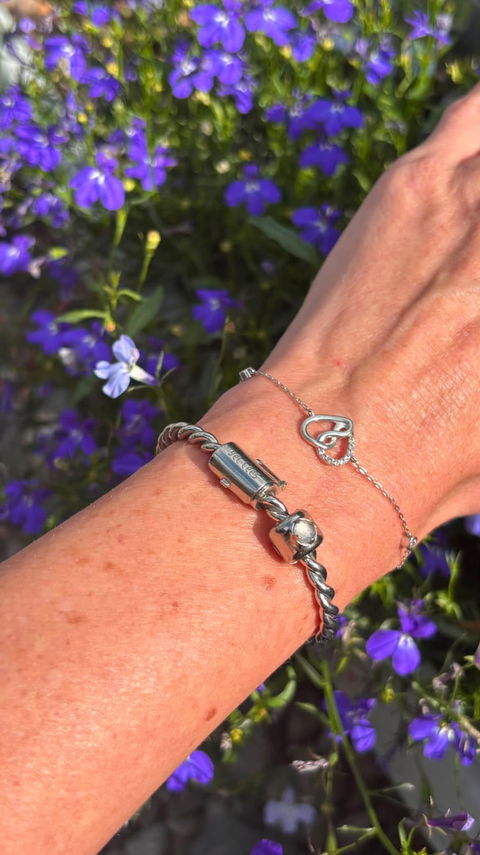
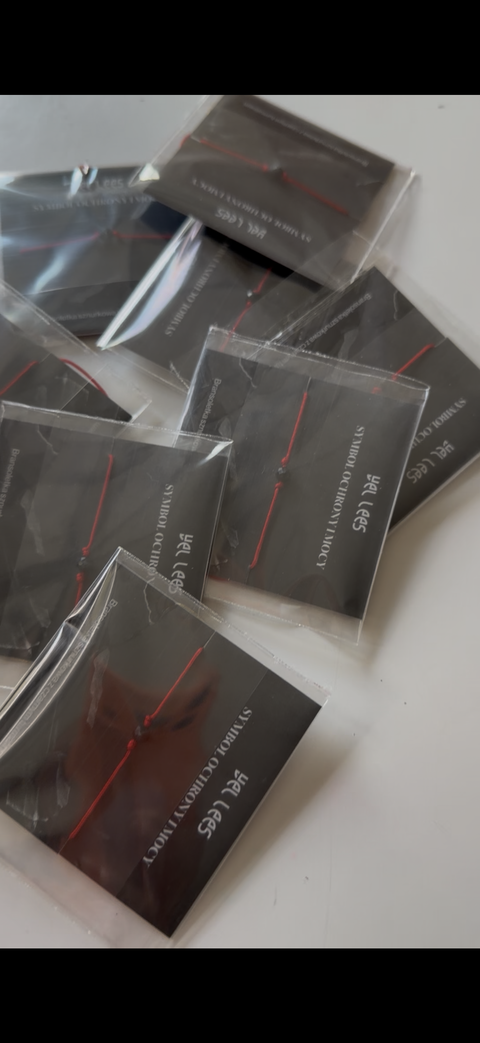
A bracelet is the most versatile way to wear black tourmaline. It is visible, easy to put on every day and works well both on its own and stacked with other bracelets. The VEL LEES range includes delicate string designs, such as the red string bracelet with black tourmaline, as well as bracelets with clearly visible stones, for example the matte tourmaline 6 mm bead bracelet.
Close to your heart: necklace and pendant
A necklace or pendant lets you wear the stone closer to your heart. It is often described as a more personal choice than a bracelet. You can choose a classic black tourmaline pendant, a black tourmaline necklace in gold-plated 925 silver, or a 2-in-1 necklace with a dowsing pendulum, which combines jewellery with a tool used in dowsing practice.
Tourmaline beyond jewellery: perfume and candle
Tourmaline also appears in products beyond jewellery. VEL LEES TURMALIN perfume, with a stone inside the bottle, is currently our most popular product featuring this stone. A similar mood comes from the soy candle with black tourmaline, which you can light as part of an evening wind-down ritual.
Black tourmaline: what to pair it with
Black tourmaline looks good in both silver and gold plating: silver brings out its cool, matte colour, while gold plating adds contrast between the dark stone and the warm metal. As for combining it with other stones, tradition often pairs tourmaline with stones in light, calming colours, such as amethyst or rose quartz, to create a contrast between grounding and gentleness. You can also wear it on its own, without other stones, which is often the choice of people looking for simplicity and a focus on a single intention.
Moonstone, red and silver: combinations
Black tourmaline also works well with red, for example in a red string bracelet, since the red string is likewise associated with protection in many cultures. With light stones such as moonstone or rock crystal, tourmaline creates a striking black-and-white contrast, while warm shades of brown and beige give a softer, more natural effect. When stacking several bracelets, it helps to stick to one dominant metal colour, for example all silver or all gold plating, so the whole look stays cohesive.
In terms of styling, black tourmaline works just as well in casual everyday outfits as in more elegant ones. Thanks to its black colour, tourmaline is easy to match with most clothes, and a matte finish goes well with natural fabrics and muted colours, while shiny or faceted tourmalines work better as a bold accent in an evening look. You can also wear several tourmaline bracelets at once for a layered, fuller effect on your wrist.
How to choose black tourmaline jewellery
When choosing black tourmaline jewellery, start with how and where you plan to wear it. For everyday wear, a simple form is ideal: a bracelet or a small pendant that won't get in the way at work and is easy to match with the rest of your outfit. For special occasions, people tend to reach for larger, shiny or faceted stones. If you are just starting out with natural stones, black tourmaline is an excellent first choice: it goes with any colour palette and is affordable.
Matte or shiny?
Matte tourmaline has a subdued, natural look and suits everyday outfits. Smooth, shiny tourmaline reflects more light and is often chosen as a bolder accent. Both are the same stone; the only difference is how the surface is finished.
Silver, gold plating, copper or brass?
The metal shapes the character of the whole piece. 925 silver gives a cool, bright contrast with the dark stone, gold plating adds warmth, and copper and brass, used in the tensor designs, have a warmer, more natural tone. You will find all available designs on the VEL LEES website, in the black tourmaline jewellery collection.
Stone and bracelet size
For bead bracelets, measure your wrist and choose a size with a little extra room so the bracelet sits comfortably. 4 mm stones are more delicate, while 6 mm stones are more visible on the wrist. For pendants and necklaces, chain length matters: a shorter chain sits close to the neck, a longer one falls to the breastbone.
See the black tourmaline jewellery collection, where each category offers different finishes: bracelets with tourmaline beads, earrings, pendants and necklaces. You can add the design you like to your cart and pair it with the rest of your everyday jewellery.
Black tourmaline bestsellers
Our most popular black tourmaline products.


Black tourmaline in tensor jewellery
Some VEL LEES designs combine black tourmaline with copper, brass or silver in the form of tensor jewellery, such as the tensor amulet with black tourmaline or the copper tensor earrings. Tensor jewellery draws on the dowsing tradition, in which shapes and proportions are given symbolic meaning. It is an approach based on tradition and intention, not on properties confirmed by research. Combined with black tourmaline, associated with grounding, it makes a set for people who like jewellery with a deeper, symbolic message.
Tourmaline and your daily intention
Many people treat tourmaline jewellery as part of a daily ritual. As you put on a bracelet or pendant, you can silently name one intention for the day, for example calm before a difficult conversation, attentiveness to your own needs, creativity at work, the ability to focus or perseverance in what you do. The intention can change, and the jewellery itself becomes a small reminder of what matters.
The grounding tradition also suggests a simple practice: a few calm breaths with your hand on the stone in the morning or evening. It is a way of focusing, not a healing method, and its meaning comes from your own experience.
What to keep in mind when wearing it
Although tourmaline is hard, it is not indestructible. A strong knock can crack the stone, and metal settings lose their shine over time. It is a good idea to take your jewellery off before sport, manual work and contact with chemicals, store it separately so the stones don't scratch against other items, and wipe it with a soft cloth after wearing.
Tourmaline and the zodiac
Tourmaline is one of the October birthstones, alongside opal, and is often linked with Libra and Scorpio. You will find the full overview, including which other zodiac signs this stone suits, in a separate article: Which zodiac sign is tourmaline for?
Natural tourmaline: how to recognise it
You can recognise natural tourmaline by a few features: the characteristic striations on the crystal, high hardness and its weight in the hand. These features are only clues, however, and none of them confirms on its own that the stone is genuine. Imitations are often made of glass or of cheaper, dyed stones that lack the same structure. You will find a full step-by-step guide to checking whether tourmaline is genuine in a separate article.
What to look for when assessing a stone:
- Striations. Raw crystals show lengthwise grooves running along the axis.
- Weight. Genuine tourmaline tends to feel heavy for its size and heavier in the hand than glass. This is only a rough clue, though, not a test.
- Lustre. A natural stone has a matte or glassy lustre, without an unnaturally mirror-like smoothness. In strong light, black tourmaline may shimmer with hints of grey or brown. Small inclusions, natural traces inside the stone, are normal in natural stones and are not necessarily a flaw.
- Seller. Choose sellers who state where the stone comes from and describe what type it is. If in doubt, a gemmologist's assessment is the most reliable.
How to care for tourmaline
Take your black tourmaline jewellery off for bathing, sleeping and when applying cosmetics, and clean it with lukewarm water, mild soap and a soft cloth. You will find a full care guide, including how to look after gold plating and silver, in a separate article.
Black tourmaline: myths and facts
There are quite a few oversimplifications about black tourmaline, so it is worth setting the record straight.
Myth: black tourmaline is a rare, very expensive stone. Fact: schorl is the most common variety of tourmaline, which is why it is available at affordable prices. Its coloured varieties, such as Paraíba, are rarer and more expensive.
Myth: black tourmaline protects against negative energy, eliminates anxiety and brings good luck. Fact: this is part of its symbolism and tradition, not a proven effect. For many people the stone is a personal symbol of calm and stability, but it does not guarantee any result.
Myth: black tourmaline protects against electromagnetic radiation from electronic devices. Fact: there is no scientific evidence for this. The belief comes from popular symbolism rather than from research.
Myth: every black stone is tourmaline. Fact: onyx, obsidian and hematite look similar, but they have a different structure and different physical properties.
Myth: the stone needs no care at all. Fact: despite its high hardness, tourmaline can crack from a strong knock, and metal settings need gentle care.
Myth: the stone can replace treatment or a specialist's advice. Fact: there is no scientific evidence that black tourmaline supports the treatment of illnesses such as arthritis or adrenal disorders, improves immunity or circulation, or eases motion sickness. Jewellery with stones is a symbol and part of a personal ritual. It is not a medical device and does not replace medical advice.
FAQ: frequently asked questions
What is tourmaline? Tourmaline is a group of silicate minerals that occur in many colours. Its black variety, known as schorl, is the most common form of the stone.
Why do people wear black tourmaline? In tradition, black tourmaline is associated with protection and grounding. People often reach for it when they need more stability, for example during times of change or under a heavy workload.
Can tourmaline be worn every day? Yes. Tourmaline has a hardness of 7–7.5 on the Mohs scale, so it copes well with everyday wear and has relatively high scratch resistance.
How does black tourmaline differ from other black stones, such as onyx? Tourmaline has characteristic lengthwise striations and a crystalline structure that onyx lacks. Their chemical composition also differs: tourmaline is an aluminium borosilicate, while onyx is a variety of chalcedony.
What should I pair black tourmaline with? It goes well with both silver and gold plating, and among stones it is often paired with amethyst or rose quartz. It looks just as good worn on its own.
Where does the tourmaline used in VEL LEES jewellery come from? Our tourmaline comes from India, one of the world's main sources of this stone.
VEL LEES jewellery is not a medical device and does not replace medical advice.