Energy Cubits – types, properties, and effects
What is a “cubit”?
Historically, a “cubit” (in Polish often called a “kubit”) is simply an ancient unit of measurement – roughly the length of a human forearm. Today, in esoteric and “energy” circles, the word “cubit” has taken on a whole new meaning. It refers to a specific length (or its corresponding frequency) that, according to some researchers and practitioners, has therapeutic, protective, or harmonizing properties.
For example, the so-called Sacred Cubit is often linked to a measurement used in the Egyptian pyramids, and the frequency attributed to it is approx. 144 MHz. The Lost Cubit, on the other hand – said to have been rediscovered in the 1990s – is associated with deeper healing. Many people in the esoteric world use various kinds of “cubit” tools, such as rings or pendants, believing that they emit a specific energy field.
So what does “a specific energy field” actually mean when it comes to cubits?
Put very simply, the assumption is that the length of a conductor (e.g., a metal ring) acts as an antenna. The more precisely the circumference is made, the stronger the resonance with the frequency attributed to it. This is the idea behind the concept of “cubits” and their supposedly varied properties.
“Subtle waves” and the theory
Practitioners and authors who connect cubits with esotericism often refer to so-called subtle waves. What are they?
- They are usually said to be impossible to measure with conventional scientific equipment.
- Many people believe that it is precisely these waves that can affect the human body, support the healing process, or protect against harmful external radiation.
In practice, the Sacred Cubit, e.g., is often linked to the number 144 (hence 144 MHz) and described as the “basic harmony.” The Lost Cubit is attributed a resonance of approx. 177 MHz and is associated with deeper emotional work.
So how should you approach these MHz values?
Opinions are divided here. Some publications claim this can be demonstrated with measuring instruments and research on electromagnetic waves. Other sources say it is entirely metaphorical: 144 MHz is simply a convenient symbol – the number 144 appears in various spiritual teachings, so assigning it to the Sacred Cubit strengthens the message.
The most common types of cubits
Just as there are different metal alloys (with different proportions of components), esoteric literature describes many “variants” of cubits. Below are some of the most popular ones – although in this field there is no single, definitive list.
-
Sacred Cubit
- Length: about 20.6 inches (approx. 52.3 cm).
- Attributed frequency: about 144 MHz.
- Use: considered the “basic” cubit; used to harmonize energy, for protection, and to support the healing process.
- Fun fact: it is often linked to the Egyptian pyramids and ancient royal measures, although the exact values may in fact vary from source to source.
-
Lost Cubit
- Length: about 23.49 inches (approx. 59.7 cm).
- Attributed frequency: about 177 MHz.
- History: reportedly rediscovered in the 1990s by Hans Becker.
- Use: helps with deeper emotional work; support when working through trauma, stress, and energy blockages.
-
Empowerment Cubit
- Length: approx. 28.86 inches (with minor differences between publications).
- Attributed frequency: not clearly defined in many sources; 188 MHz is sometimes given.
- Use: strengthening self-esteem, motivation, and courage. Most popular in certain circles in the US.
-
Earth Resonance Cubit
- Length: depending on the author, 15 inches, 21 inches, or close to the Sacred Cubit.
- Name: linked to the theory of the Schumann resonance (approx. 7.83 Hz), although in practice it refers to a band of higher frequencies.
- Use: strengthening your connection with the Earth’s natural field, grounding, reducing the influence of artificial waves.
-
Royal Cubit
- Length: approx. 20.60–20.62 inches, i.e., almost identical to the Sacred Cubit.
- Differences: sometimes regarded as a purely physical measure of ancient Egypt, with the Sacred Cubit seen as the spiritual version of the same measure. The differences are so small that some people treat the two cubits as one and the same.
-
Other, less popular cubits
- Unity Cubit: associated with creating harmony between people and between different planes of existence.
- Divine Cubit: supposedly credited with the highest level of healing and connection with the “source.”
- Atlantean Cubit, Lemurian Cubit: meant to suggest a link with the mythical civilizations of Atlantis or Lemuria.
- King’s Chamber Cubit: often linked to the dimensions of the King’s Chamber in the Great Pyramid.
- New Cubit, Galactic Cubit, Quantum Cubit: names introduced by various authors, often in channeling publications.
How are cubits used?
Before we answer that, consider an analogy with metal alloys: just as the components of an alloy are chosen to achieve a particular strength or color, in esotericism specific “wavelengths” (i.e., types of cubit) are chosen to achieve a particular effect.
In practice:
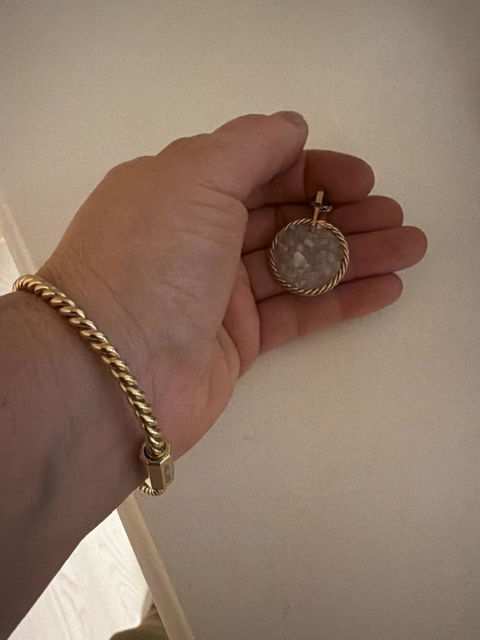
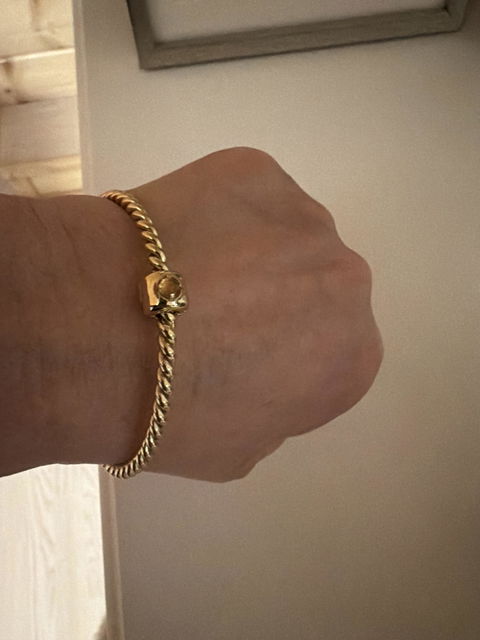
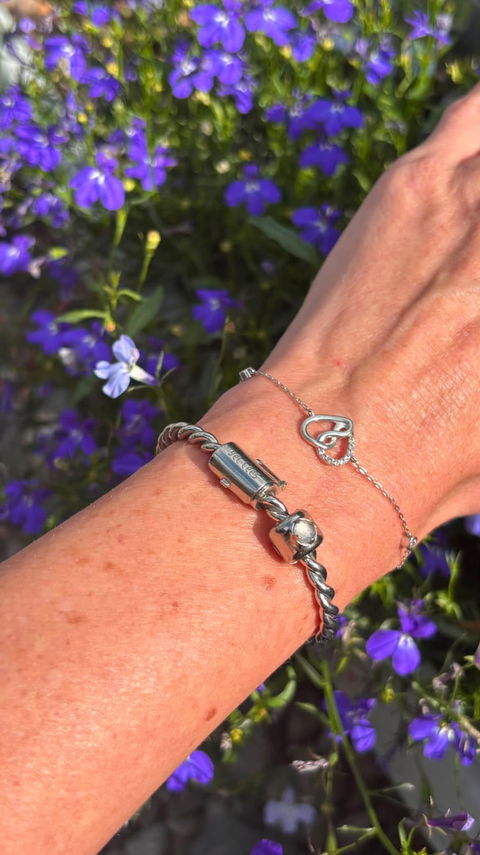
- Rings and pendants: The most common are copper rings (sometimes silver-plated or gold-plated) with a precisely calculated circumference. Some people wear them as jewelry; others place them in rooms to harmonize the space.
- Meditation exercises: People fascinated by cubits use them while meditating. For example, they place a ring on the heart chakra or the third eye chakra, believing it intensifies the flow of energy.
- Emotional work: The Lost Cubit is recommended if you want to work through deep psychological patterns. You might hold such a ring in your hands, breathing calmly and imagining that you are “dissolving” whatever feels emotionally difficult.
- Personal growth: The Empowerment Cubit is often used when working on building self-confidence.
So what does science say?
As with research on alloy components, where each addition affects different properties, here too we would like to see concrete experiments. However:
- There are no official, peer-reviewed studies that clearly confirm the existence of “subtle radiation” or the effect of specific cubits on health.
- Some in the scientific community believe that any improvement in well-being may be due to the placebo effect or to subjective meditative experiences.
- Supporters of cubits argue that the subtle energy field is not yet fully understood by modern physics and that we are only on the threshold of discovering new phenomena.
Does it really work?
A lot depends on your perspective.
- For spiritually and esoterically minded people – cubits can be a real tool for working with their own energy. Many practitioners say they feel a clear difference, and harmonizing a space with rings is often part of their everyday routine.
- For skeptics and scientists – the lack of hard evidence casts doubt on whether such effects exist at all.
Just as with the base metal content of an alloy, where proportions are calculated, here too the measurement of a cubit in inches or centimeters, or its associated frequency, is the very essence of how it works for some, and merely an esoteric curiosity for others.
How do you choose the “right” cubit?
If you are just starting to explore the subject:
- Sacred Cubit – often recommended as the most popular, all-purpose choice.
- Lost Cubit – for people focused on emotional work and spiritual blockages.
- Empowerment Cubit – for those who want to build self-confidence and a sense of agency.
There are also proprietary systems in which “choosing a cubit” depends on dowsing tests (with a pendulum) or on which measurement “resonates” most with a particular person.
Can you combine different cubits?
Yes, many people combine several types. Someone might keep a Sacred Cubit ring at home and take a Lost Cubit to work. Others wear an Empowerment pendant and hang an Earth Resonance cubit in the bedroom. Just as combining metals in one alloy produces different properties, different cubits are believed to create a varied energy field.
Where does the “Sacred Continent” fit in?
The idea of a “sacred continent” (Atlantis, Lemuria, Mu) comes up most often in channeled messages and legends about ancient, advanced civilizations. According to these accounts, those societies knew the secrets of geometry and energy, including the mysterious “cubit” measurements. That is where names like Atlantean Cubit or Lemurian Cubit come from.
If someone says they have a “sacred continent cubit,” they usually mean one of these mythical names. However, there is no single, generally accepted measurement that counts as an official “Sacred Continent Cubit.”
New trends and names
Have you heard of the Quantum Cubit, Galactic Cubit, or Elysium Cubit? You may well have, because more and more variants like these have appeared in recent years, created by various authors and spiritual groups. Each one adds its own narrative: a higher vibration, a new era, a new consciousness.
Are any of these “more real” than other cubits?
That is hard to judge objectively. The general rule is that if someone announces the “discovery” of a new cubit, gives it a name, and describes its supposed effects, it may catch on in the esoteric world – as long as other people start confirming it through their own experiences.
Controversies and doubts
Just as with the certification of precious metals at assay offices (where there are strict procedures and measurement results), you might expect clear evidence here that frequencies of 144 MHz or 177 MHz exist in metal circuits. Meanwhile:
- Consistent results are often lacking. One author measures the circumference and gets 20.60 inches, another 20.62 inches, and yet another 20.58.
- Rounding and loose interpretations are sometimes used. That is why the Royal and Sacred Cubits are often treated as interchangeable.
- Scientific evidence for any specific healing radiation is fragmentary or anecdotal.
- There are, however, people who point to alternative methods of measurement (e.g., dowsing, pendulums, long-term observation) and claim that by these standards they can detect differences between individual cubits.
Do we have to believe all of this?
Some people use cubits out of curiosity. Others take them very seriously, putting together large sets of rings and tools (often collectively called Light-Life Tools, popularized by Slim Spurling, among others).
The most important things to remember:
- Cubits are not a substitute for professional medical treatment. If you have a serious health problem, always consult a doctor.
- The placebo effect can be very strong. Even if part of a cubit’s effect comes from the user’s belief, that in no way disqualifies it as a method of supporting well-being.
- Subtle energy is not a defined concept in the natural sciences. You can treat it as part of a spiritual worldview.
Sample exercises and tips
As mentioned, some people use cubits in meditation or emotional work. Below are a few typical practices that don’t require advanced knowledge but may be an interesting addition to your own experience:
Meditation with the Sacred Cubit
- Sit down in a quiet place.
- Take the ring (with a circumference of approx. 52 cm) and rest it on your lap or hold it close to your heart.
- Breathe freely, imagining your energy field becoming more harmonious.
- Spend 10–15 minutes on this, noticing whether you feel any changes in your body or mind.
Working with the Lost Cubit on deep emotions
- In moments of intense stress or sadness, sit down holding a Lost Cubit ring (approx. 59.7 cm).
- Breathe deeply and let your emotions “pass through” your body, allowing them to surface freely.
- Some people describe a sensation of blockages “dissolving” in the chest or abdomen.
Building self-confidence with the Empowerment Cubit
- Gently hold the ring against your solar plexus (the area between the breastbone and the navel).
- Think about situations in which you want to be more decisive.
- Repeat positive affirmations silently (or out loud), such as: “I trust my power; I act with confidence and calm.”
Can you measure it with “plain common sense”?
In theory, yes, if you have equipment for studying electromagnetic waves or are familiar with dowsing techniques. In esoteric circles, however, people most often rely on:
- Feeling tests (how do I feel with this ring?),
- Pendulums (the reaction to the circumference),
- Meditation practice (do I notice a difference in the depth of my concentration?).
The effects tend to be very subjective. Interestingly, some dowsers claim that even a minimal difference in length (e.g., 0.1 inch) causes a jump in frequency, which can change the way a cubit works.
Why are new cubits constantly being discovered?
You could compare it to developing new metal alloys, where each maker experiments with proportions to achieve new characteristics. In the spiritual sphere, the appearance of a “Galactic” or “Quantum Cubit” often stems from:
- New channeled messages and teachings in which the authors claim to receive information about yet another “sacred measure.”
- A desire to develop their own techniques and systems and to stand out from existing schools.
- A need for spiritual progress – if the Sacred and Lost Cubits are only the beginning, perhaps there is an even “higher” frequency waiting to be discovered.
Do we need to know every cubit “variation”?
No, just as not everyone needs to know the entire catalog of metal alloys. In practice, many people stick to the best-known ones (Sacred, Lost, Empowerment) and treat the rest as curiosities.
Summary
What is a cubit?
An ancient unit of measurement that, in esotericism, has come to denote particular lengths and frequencies.
The most popular types
- Sacred Cubit (approx. 20.6 inches),
- Lost Cubit (approx. 23.49 inches),
- Empowerment Cubit (approx. 28.86 inches), as well as several other, less standardized variants.
Frequencies
The Sacred Cubit is associated with 144 MHz and the Lost Cubit with 177 MHz; other frequencies depend on the source.
Uses
- Meditation,
- Emotional work,
- Harmonizing spaces,
- Protection against “negative energies.”
Controversies
No official scientific confirmation, discrepancies in lengths and naming, and a possible placebo effect.
Conclusion
Cubits are one strand of esotericism that combines ancient legends with energy concepts. For some, they are an important tool for spiritual growth; for others, a curiosity with no scientific basis.
So, just as with metal alloys, where a precise composition and the fineness hallmark matter, in the world of cubits what matters is the exact circumference and frequency, which – according to practitioners – determine their distinct energetic properties.
Is it worth a try?
If you’re curious, you can treat it as an experiment in personal growth. You may discover something valuable in it, just as we wear jewelry, amulets, or copper items every day, believing in their positive influence. At the same time, remember that no cubit can replace conventional medical treatment, and any decision to use a tool like this should always be informed and responsible.