Slim Spurling: The Man Who Saw Light in Copper
History, geometry and the mystery of the four cubits
1. Who was Slim Spurling?
Slim Spurling (1938–2007) was an American blacksmith, researcher and geobiologist who devoted his life to exploring the subtle energies of nature.
He was not a scientist in the classical sense – he worked in his workshop in Colorado, combining a craftsman’s practice with spiritual intuition and dowsing (radiesthesia).
Over time, he became one of the most important pioneers in the field of so-called light technology – Light-Life™ Tools.
Spurling believed that the Earth and humans form a single energy circuit, and that its flow can be harmonized with simple, geometric copper tools.
His research inspired thousands of people, from dowsers to scientists, and his ideas made their way into laboratories, greenhouses, workshops and homes around the world.
2. The birth of the Tensor Ring – discovering light in geometry
In the ’80s, Slim noticed that a twisted copper wire, when cut to a precisely defined length, begins to behave like an energy antenna.
When its ends are soldered together into a ring, something extraordinary appears – a tensor field.
Spurling claimed that this field neutralizes electromagnetic fields, brings order to the structure of water and even affects a person’s mood and concentration.
Slim discovered that each such ring resonates at a specific frequency of light,
and that its effect depends on the geometric length of the wire, known as the cubit – an ancient Egyptian unit of measurement preserved in the proportions of the Great Pyramid of Giza.
3. Neter Lengths – sacred measures of light
According to the research of Spurling and his collaborator Hans Becker, cubits are not ordinary lengths.
They are “neter lengths” – ancient measures that represent harmonic wavelengths of light.
Each of them corresponds to a different “spiritual frequency” that acts on a different level: body, mind, spirit and Earth.
Slim claimed that these sacred lengths are like codes of the Universe – the language in which light communicates with matter.
Four main measures emerged from his research and became the foundation of all tensor technology.
4. Slim Spurling’s Four Sacred Cubits
| Cubit name | Length | Frequency | Symbolism and effect |
|---|---|---|---|
| 1️⃣ Sacred (Royal) Cubit | 20.63 inches (≈52.4 cm) | 144 MHz | The oldest cubit, found in the King’s Chamber of the Pyramid of Khufu. According to Spurling, it works on the physical plane: the structure and balance of the body. |
| 2️⃣ Lost Cubit | 23.49 inches (≈59.7 cm) | 177 MHz | Discovered with Hans Becker. According to Spurling, it affects the emotions and the mind and supports intuition and mental processes. In Spurling’s tradition, these are the “consciousness cubits” that vibrate at the speed of thought. |
| 3️⃣ New / Empowerment Cubit | 28.857 inches (≈73.3 cm) | 188 MHz | According to Spurling’s followers, it influences spiritual transformation, activating the inner light and the connection with the higher “Self”. Used for working with heart energy and the pineal gland. |
| 4️⃣ Earth Resonance Cubit | 39.313 inches (≈99.85 cm) | 333 MHz | The rarest one, a later discovery by Slim’s circle. It symbolizes harmony with the Earth, grounding and resonance with the planet’s frequency. It helps connect higher energies with matter. |
🔷 The hierarchy of the four frequencies
-
144 MHz – light in the body (physics and matter)
-
177 MHz – light in the mind (consciousness and emotions)
-
188 MHz – light in the soul (spirit and integration)
-
333 MHz – light in the Earth (connection with nature, stability)
5. Uses of tensor rings
Slim emphasized that the tensor field is like a “window of light” — an ordered space in which energy keeps its natural harmony.
It needs no power supply, because it works through geometry and resonance alone.
In practice, his tools (Light-Life™ Tools) were used in many fields:
🌿 In nature:
-
According to Spurling’s followers, plants within the field of a ring grew faster, had larger leaves and fewer pests.
-
Spurling’s followers claimed that water kept inside a ring changed its pH from acidic to neutral, and its structure became “alive”.
🧘 For people:
-
According to Spurling’s followers, users experienced calm, better sleep, muscle relaxation and deeper breathing.
⚙️ In technology:
-
Spurling claimed that rings placed around cables, meters and computers reduce noise and EMF radiation.
-
Placed in a car, they improved engine performance and lowered fuel consumption (according to user reports).
6. Harmonizers, Coils and Feedback Loops
Slim did not stop at rings. He created further tools that worked together with the Tensor Field:
-
Acu-Vac Coil – according to Spurling, an “energy vacuum cleaner” that removes tension from the body; energy flows in at one end, is transformed into light and flows out at the other.
-
Feedback Loop – a figure-eight coil that, according to Spurling, not only removes negative energy but immediately fills the space with light.
-
Harmonizer – a sphere made of three rings that creates a toroidal flow of light, used to cleanse spaces, air and soil.
It was the Harmonizer that was used in the famous 1994 experiment,
when, according to Spurling and his team, they cleared the air over Denver within a few hours.
7. Light as the language of life
For Spurling, light was not just a metaphor but a concrete physical structure whose behavior can be described mathematically.
In his eyes, the tensor ring was a superconductor of light — a device that expands the orbital radius of electrons in matter.
In his view, this explained why water in the ring’s field becomes more ordered,
and people – calmer.
Slim used to say that “light in a tensor field is like waves on a lake: when you fall into their rhythm, everything returns to balance”.
8. Legacy and continuation
After Spurling’s death, his research was continued by, among others, Katharina Spurling-Kaffl, Hans Becker and the teams at IX-EL and Twistedsage Studios.
New cubits were added (e.g., Galactic, Harmony, 764 MHz), and combinations of several lengths were explored, giving rise to the so-called Unity and Synergy Rings.
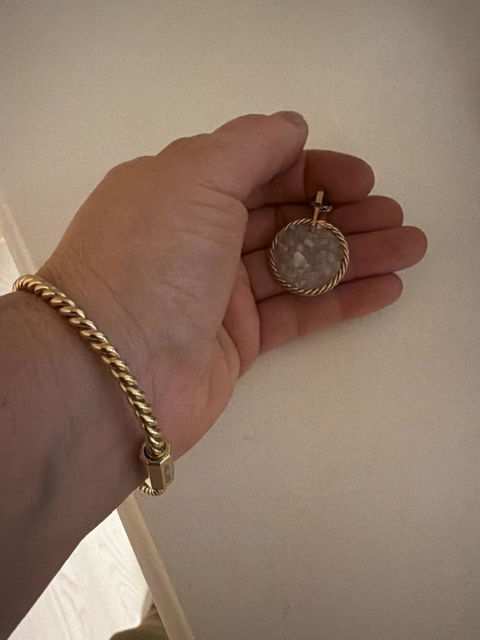
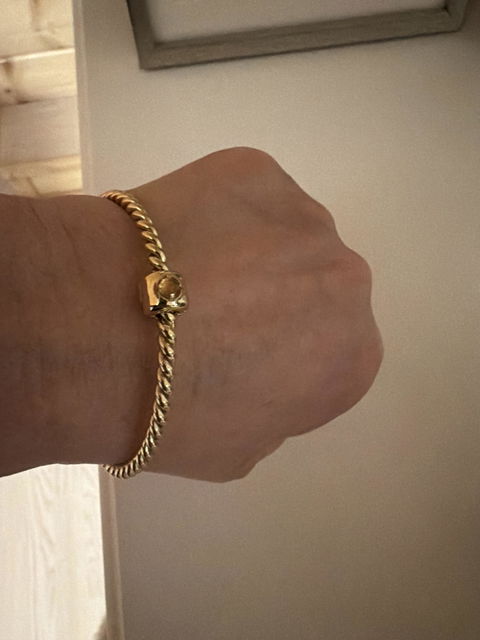
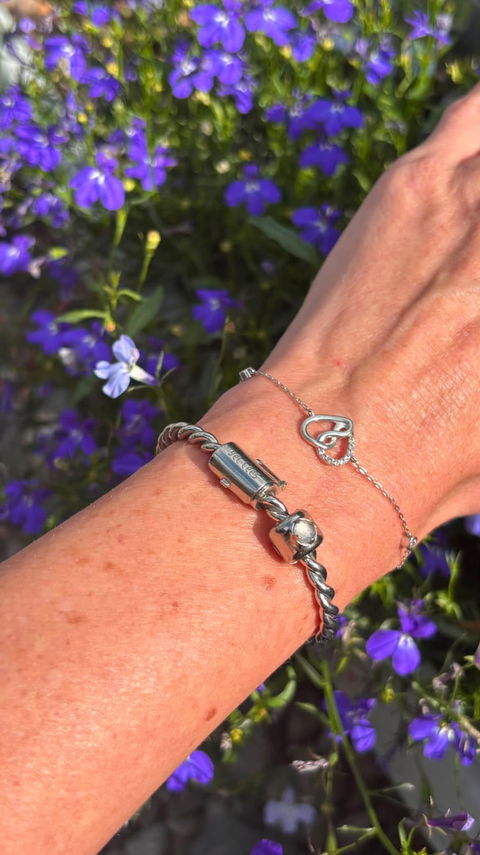
Contemporary brands – such as VEL LEES – draw inspiration from Slim Spurling’s original work,
combining his precise geometry with artistic design and modern materials,
so that tensor tools can become part of everyday life – not only for researchers, but for everyone seeking harmony.
9. Why it still captures the imagination
Although science does not yet have the language to fully describe tensor phenomena,
many people who have come into contact with Spurling’s rings say that there “is” something in them.
Perhaps it is the subtle geometry, perhaps the proportion, perhaps the creator’s intention itself –
but, they say, the effect can be felt.
In a world full of technological chaos, tensor geometry is becoming a symbol of order and harmony.
It is not magic – it is a reminder that light is everywhere,
and that its language is shape, proportion and rhythm.
10. Summary
Slim Spurling left behind more than just metal rings.
He left a philosophy of light – a vision in which people, nature and technology can resonate in a single rhythm.
“I don’t create miracles. I create the conditions in which miracles become possible.”
— Slim Spurling
✨ Today, the VEL LEES brand carries on this legacy:
combining ancient geometry, cubit proportions and precious metals,
it creates modern tools of harmony.
Just as Slim taught – light always begins with shape.
Sources:
-
Cal Garrison, Slim Spurling’s Universe (2004)
-
Cal Garrison, Light-Life Technology User’s Guide
-
The Tensor and Harmonizer Rings by Slim Spurling (IX-EL Labs)
-
Mind, Energy and Machines (Hans Becker, 2009)