How to Spot a Genuine Natural Stone: The VEL LEES Guide
The market for natural stone jewelry is flooded with fakes. Glass beads, dyed resin, synthetics — all of it sold as "natural stone". You have every right to ask. You have every right to know. This article gives an honest answer to the question we hear from customers more than any other: how can I be sure the stone is genuine?
Why does stone authenticity matter so much today?
Go to any popular online marketplace and search for "tourmaline bracelet" — you'll get thousands of results. Prices range from about €4 to €95. How is that possible?
The answer is simple, and not a pleasant one: most cheap "natural stones" in mass-market jewelry are glass beads, dyed resin or synthetics. Machine-made, identical in size and color, with none of the variation you find in nature. Cheap to produce. Sold with a "natural" label.
In the age of AI, the problem has only grown. Today anyone can generate a "certificate of authenticity" in 30 seconds. Customers know this, and they are right not to trust a piece of paper. So instead of a certificate, we give you knowledge. Specifics. The real characteristics that set a natural stone apart from a fake.
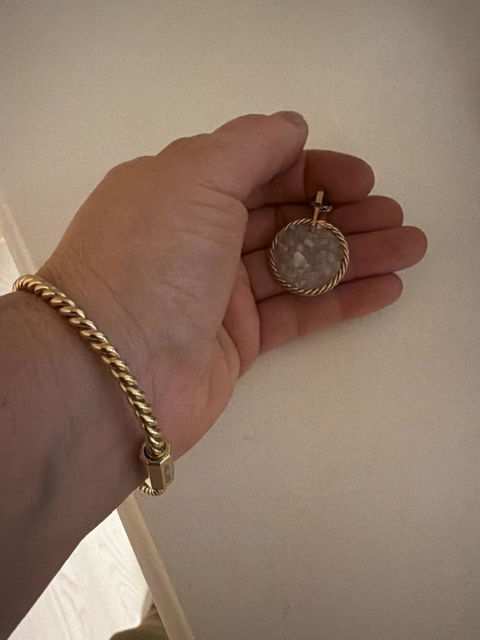
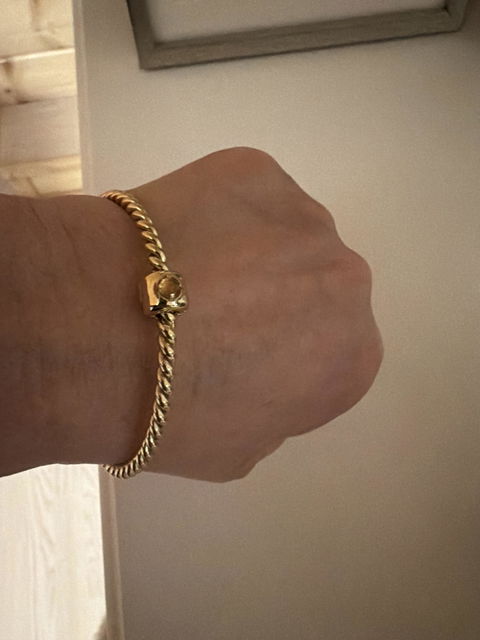
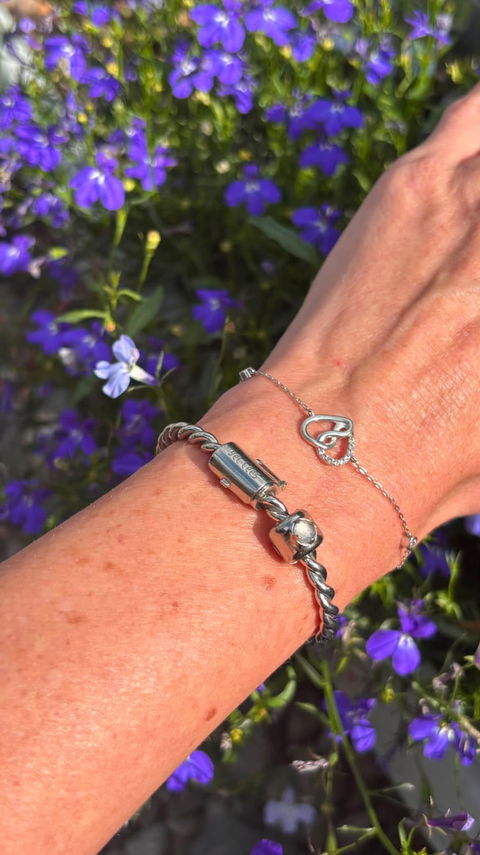
VEL LEES jewelry with natural stones
VEL LEES natural stones come in many forms — from everyday jewelry to special pieces for energy practices and self-care. Every collection draws on our portfolio of 17 minerals.
VEL LEES perfumes with a natural stone — fragrance combined with the energy of the mineral.
Materials and finishes — what lies beneath the stone?
The stone is the heart of every piece — but the material it is set in matters just as much. At VEL LEES we work with four materials, chosen to suit the character and purpose of each product. Every product in our store tells you which metal it is made of.
Dowsing pendulums with stones · EMF harmonizers · ROYAL TERRA amulets and earrings
Where do VEL LEES stones come from?
Our stones don't come from "nowhere". Each one has specific geographical roots — a place on Earth where it formed over millions of years under pressure, heat and the influence of other minerals. Country of origin is to a stone what terroir is to wine.
Amethyst
Zambia · Quartz · 7 Mohs
Zambian amethyst is prized for its deep violet color — from soft lavender to intense purple.
Citrine
Zambia · Quartz · 7 Mohs
A rich golden-yellow hue — from honey yellow to amber glints.
Black Tourmaline
India (Himalayas) · Silicate · 7–7.5 Mohs
Deep matte black. Regarded as one of the strongest protective stones.
Labradorite
Madagascar · Feldspar · 6–6.5 Mohs
In the light it reveals labradorescence — flashes of blue, gold and violet.
Rose Quartz
India · Quartz · 7 Mohs
A milky pink color. The stone of the heart, love and unconditional empathy.
Moonstone
India · Potassium feldspar · 6–6.5 Mohs
A pearly glow — the effect of adularescence. A stone of intuition and natural cycles.
Lapis Lazuli
Afghanistan · Silicate · 5–5.5 Mohs
Deep navy blue flecked with pyrite — like a starry sky.
Hematite
Brazil · Iron oxide · 5.5–6.5 Mohs
A metallic luster from silvery gray to deep graphite. A stone of strength.
Snow Obsidian
Arizona, USA · Volcanic glass · 5–5.5 Mohs
Black volcanic glass with snow-like cristobalite inclusions.
Rhodonite
Ural Mountains, Russia · Silicate · 5.5–6.5 Mohs
Pink with dark veining. A stone of emotional balance and forgiveness.
Zoisite with Ruby
Tanzania · Epidote+corundum · 6–7 Mohs
Green zoisite with inclusions of red ruby — two minerals in one.
Prehnite
South Africa · Silicate · 6–6.5 Mohs
A delicate, translucent green. A stone of peace and inner calm.
Carnelian
India · Quartz · 6.5–7 Mohs
A warm orange-red color. A stone of courage, vitality and action.
Onyx
India · Quartz · 6.5–7 Mohs
A deep, warm black. A stone of inner strength, discipline and protection.
Tiger's Eye
South Africa · Quartz · 6.5–7 Mohs
Golden-brown bands with a cat's-eye effect. A stone of courage and mental clarity.
Fluorite
India · Calcium fluoride · 4 Mohs
Zoned bands of purple, green and blue. A stone of focus and clear thinking.
Rock Crystal
India · Quartz · 7 Mohs
Transparent, pure quartz. A universal stone of light and energy amplification.
An important principle: a stone's mineralogical country of origin is a scientific fact, not a trade secret. We describe where a stone comes from, not where we buy it.
In what form do the stones reach us?
To keep the final price attractive and accessible, our stones arrive already cut — most often as finished beads. We entrust the cutting to trusted, specialized partners outside Poland, where processing at scale keeps costs down.
Rare and more valuable minerals, and stones destined to be set in gold, are a different story — we take their entire processing into our own hands. These stones are cut here, in Poland.
How to recognize a genuine stone: a guide to every mineral
General rules matter — but every stone also has its own distinctive traits that can't be faked cheaply.
Traits shared by all natural stones
What you check
Natural stone
Fake / synthetic
Temperature
Cool, warms up slowly in your hand
Takes on heat quickly — like plastic or glass
Color variation
Subtle differences in shade between beads
Perfectly uniform color in every bead
Inclusions under a loupe
Microscopic inclusions, veins, natural clouds
Perfect clarity or artificial bubbles
Bead size
Slight, natural differences in diameter
Every bead identical — machine production
Weight
Heavier than it looks — minerals are dense
Lighter — glass is less dense than minerals
What to check, stone by stone
Labradorite
Madagascar · Feldspar
An effect that is hard to fake: labradorescence — a flash of blue or gold that appears as you turn the stone in the light. How to check: hold it under a lamp and rotate it slowly — genuine labradorite will "flash", an imitation won't react.
Under a loupe you can see elongated inclusions running parallel to the crystal axis. Beads with no inclusions at all, perfectly black and perfectly round, are almost certainly glass. Natural tourmaline is never "perfect".
Natural amethyst shows varying color zones — never a perfectly even purple. Synthetic amethyst has spiral growth patterns visible under a loupe. A very intense, perfectly uniform color is a warning sign.
Natural rose quartz has a pale, uneven color — often with whitish patches. An intensely pink, perfectly uniform color often means dyed agate. Discoloration and variation are marks of authenticity.
Natural citrine has a golden-yellow color with visible zoning — never uniformly intense. Most cheap "citrine" is heat-treated amethyst — you can tell by its orange tint instead of a golden one.
Genuine moonstone shows adularescence — a pearly, shimmering glow from deep inside as you change the viewing angle. Fake "moonstone" is often colored glass with no deep inner glow.
Natural lapis lazuli has golden flecks of pyrite visible to the naked eye. Fakes are often dyed howlite with no pyrite. The dye can be detected with acetone on a cotton pad.
Natural hematite is noticeably heavier than it looks and leaves a red streak on unglazed porcelain. The popular "magnetic hematite" is synthetic magnetite — genuine hematite is not magnetic.
Natural rhodonite has dark veins of manganese inclusions running through its pink base. Every stone has its own unique, one-of-a-kind pattern of veins.
Natural zoisite with ruby has an organic, irregular transition between the green and red zones. Under a loupe, the crystal structure of both minerals is visible.
Natural carnelian has uneven, zoned color — from milky orange to deep red, often with translucent transitions within a single bead. Dyed agate passing as carnelian has a flat, overly uniform and unnaturally intense orange. Held up to the light, natural carnelian "comes alive" — you can see its depth.
Natural onyx has a deep, slightly uneven black — under a loupe you can see subtle streaks and its natural structure. A perfectly black, glassy bead with no depth at all is usually dyed agate or plain glass. Natural onyx also feels distinctly cool and is heavier than plastic.
A trait that can't be faked cheaply: the cat's-eye effect (chatoyancy) — a silky band of light that glides across the surface as you turn the stone. In a natural stone it ripples softly and unevenly; in a glass "fiber-optic" imitation the sheen is too regular and artificial. Natural tiger's eye also has warm, golden-brown color transitions.
Natural fluorite gives itself away with zoned bands of color — purple shading into green and blue within a single bead, often with delicate veils of inclusions. It is also relatively soft (4 on the Mohs scale), so a natural specimen scratches easily — a perfectly hard, single-colored "bead" is usually glass.
Natural rock crystal almost always has fine internal veils, fractures or fibrous inclusions that refract light beautifully. Glass posing as crystal is either perfectly clear or contains round air bubbles, and it warms up faster in your hand. Genuine quartz stays cool and is noticeably heavier.
What we see in a genuine stone — through a jeweler's eye
What looks like a "flaw" to a layperson is, to an expert, a certificate of authenticity. With the naked eye and under light magnification, a natural stone reveals things that artificial materials — plastic, glass, synthetics — completely lack:
Unique form and structure. No two stones in nature are identical. Every piece in a batch differs subtly from the rest. Artificial materials are perfectly repeatable — and dull in their perfection.
Natural inclusions. Inside the mineral lies a fascinating micro-world: tiny inclusions of other minerals, unique fluid inclusions (bubbles), internal fractures that refract light beautifully. Synthetics are perfectly clean inside or contain unnatural, round air bubbles left by the manufacturing process.
A range of shades and tones. A natural stone has depth of color — within one batch you'll find lighter and darker tones, streaks and tonal transitions. Artificial material always has a perfectly uniform, flat color that doesn't "come alive" in daylight the way a real mineral does.
Our stone selection process
Our selection process has several stages, because we want only stones of the highest aesthetic and structural quality to make it into the finished product. There are no shortcuts. There are no "good enough" stones.
Stage I — initial sorting at the source
Before the raw material goes on to be cut, it passes a first quality check. At this stage we assess the rough pieces for color intensity and the density of natural inclusions inside the mineral. The aim is to send only the batches with the best visual promise on to processing.
Stage II — detailed inspection
Once the finished pieces are in our hands, every single one goes through a meticulous manual inspection. We don't rely on an overall impression — we examine each stone individually under a specialist magnifier (a jeweler's loupe with 10x magnification).
What do we reject, and why?
Under the loupe we check the condition of the stone's surface. We reject without exception every piece with micro-damage, chips or scratches from cutting on its facets or edges, or with open fractures that run too deep. A stone like that doesn't just lose its beauty — it could crack later on while being worn.
On average, 10–15% of the stones in every finished production batch fail our final selection and are rejected. That is a high share — but it is exactly what guarantees you receive a carefully selected, durable, flawless product. Rigorous selection of the raw material before cutting helps us limit material losses at later stages.
"A natural stone doesn't have to be perfect. It has to be real. Inclusions, subtle color differences, irregularity — these are not flaws. They are proof that the stone is exactly what we say it is."
The VEL LEES team
Why don't we issue certificates?
Certificates for semi-precious stones in mass-market jewelry have become worthless. In the age of AI, any document can be generated in a matter of seconds. We have seen certificates for glass beads. Our guarantee of authenticity rests on three pillars:
Jewelry expertise from nearly 40 years of VEL LEES family tradition — we know the stones we sell.
Long-standing relationships with trusted sources — every sourcing decision is preceded by verification.
A no-questions-asked return policy — if you have any doubts about a stone, you can return it.
We would rather invest in knowledge and relationships than in paper.
Your stone and your Soul — the VEL LEES matching system
Every stone in the VEL LEES collection is matched to specific Soul types based on numerology. Don't know your Soul Number? Discover your Soul Number →
You can spot glass beads by three traits: glass warms up faster in your hand, every bead has exactly the same color and size, and under a loupe it looks completely uniform. A natural stone is cool, varied and has visible inclusions.
Why do the stones in one bracelet look slightly different from each other?
Because they are natural — and that's a good sign. Slight variation in color and shade between beads is proof of authenticity, not a defect. A bracelet made of perfectly identical beads is a warning sign.
Why isn't my rose quartz intensely pink?
That's a good sign. Natural rose quartz has a pale, uneven color. An intensely pink, perfectly uniform stone is often dyed agate — a common practice in mass-market jewelry.
How many stones do you reject during selection?
On average, 10–15% of the stones in every finished production batch fail our final selection. We reject every piece with micro-damage, chips, scratches or fractures that run too deep — because such a stone loses its beauty and could crack while being worn.
Is a stone certificate reliable?
In the age of AI, less and less. The real guarantee is mineralogical knowledge, trusted sources and a no-questions-asked return policy.
Is "magnetic hematite" natural?
No. The popular "magnetic hematite" is synthetic magnetite. Genuine hematite is not magnetic. Our hematite comes from Brazil and is 100% natural.
What should I do if I suspect my VEL LEES stone isn't natural?
Write to us. Describe your concerns or send a photo. If anything seems off, we'll accept the return, no questions asked.
Discover the full VEL LEES natural stone collection
17 stones · Bracelets · Necklaces · Pendants · Charms · ROYAL TERRA amulets · Pendulums · Perfumes
We create natural stone jewelry, drawing on nearly 40 years of family jewelry-making tradition. Every stone that goes into our products passes through our hands and under our loupe — because we believe a stone's true value lies in its authenticity.
About the author
Mateusz Wójcik
VEL LEES co-founder, jeweler
Co-founder of VEL LEES and a third-generation jeweler. He runs Silvexcraft, a family jewelry business with a tradition of nearly 40 years. He is responsible for the craftsmanship, materials and technical side of the tensor jewelry – from the choice of copper, silver and gold to the original clasp that lets you wear an energy ring every day as a bracelet.
Discover the brand’s story →
Przepięknie wykonane, z ogromną dbałością i sercem. Projekt jakby był stworzony dla mnie, od razu poczułam ten zestaw 🤍
Mam też od Was moją pozłacaną 11, która na co dzień towarzyszy mi w moim życiu. I bardzo ją lubię 💫
Jestem bardziej zadowolona z produktów oraz obsługi sklepu
Jestem bardziej zadowolona z produktów oraz obsługi sklepu. Nie ma problemu ze zwrotem. Szybka wysyłka i pięknie opakowane oraz prezenty
Serdecznie polecam 🫶🏻
Przepiękna zawieszka z różowym kwarcem! Od razu skradła moje serce. Jest delikatna, elegancka i cudownie prezentuje się na mojej bransoletce VEL LEES. Wybrałam ją nie tylko ze względu na wygląd, ale również symbolikę różowego kwarcu – miłość, empatię i harmonię. Dla mnie jest symbolem miłości do samej siebie, wewnętrznego spokoju i nowego początku. Za każdym razem, gdy na nią patrzę, przypomina mi, że zasługuję na miłość, szczęście i wszystko co dobre. Jestem zachwycona i na pewno nie będzie to mój ostatni zakup!
Bransoletkę VEL LEES poleciła mi wróżka Raissa i był to naprawdę wyjątkowy zakup! Już po kilku dniach zauważyłam, że łatwiej zasypiam i spokojnie przesypiam całe noce. Po tygodniu poczułam większy spokój wewnętrzny, a z czasem stałam się pewniejsza siebie, odważniejsza i przestałam przejmować się opiniami innych. Mam też niezwykłe poczucie, jakby ktoś nade mną czuwał i chronił mnie przed negatywnymi ludźmi. Doświadczyłam nawet kilku dziwnych sytuacji, których do dziś nie potrafię wyjaśnić!
Nie rozstaję się z nią ani na chwilę! Mam również przepiękną zawieszkę z różowym kwarcem.Dla mnie to coś więcej niż biżuteria. Z całego serca polecam!
How do you cleanse black tourmaline? Lukewarm water, a soft cloth and a few jewelry care rules. Discover the traditional rituals for cleansing the stone, too.
How do you cleanse black tourmaline? Lukewarm water, a soft cloth and a few jewelry care rules. Discover the traditional rituals for cleansing the stone, too.
How to recognize black tourmaline: 5 ways, from striations, hardness and weight to luster and the source of the stone. See how it differs from onyx, glass and fakes.
How to recognize black tourmaline: 5 ways, from striations, hardness and weight to luster and the source of the stone. See how it differs from onyx, glass and fakes.