What are tensor hoops?
Tensor hoops are increasingly appearing in the spiritual and jewelry worlds as a tool of harmonization and protection. Below, you'll find a definition, history, uses, and tips for recognizing a well-made piece.
What are tensor hoops and tensor fields?
Tensor rings are objects most often made of copper, although variants in brass and other alloys also occur. Their distinguishing feature is the way the wire is formed and connected, creating a closed loop. According to the tensor technology, a properly designed ring generates a tensor field, i.e., an energy field with specific properties.
The tensor field, according to interpretations that go beyond classical physics, is said to harmonize and amplify energy in the environment. Proponents compare it to a subtle vortex that can influence water, plants, the human body, or space. Some practitioners describe a subtle pulsation upon contact with the hoop.
The design is based on strict proportions, primarily the length and diameter of the wire. The wire's twisting and the permanent connection of the ends into a loop are also important.
Tensor field and torsion field
In esoteric circles, the two terms are sometimes used interchangeably. According to proponents of tensor technology, a suitably twisted copper wire creates a subtle field that affects the body, water, plants, and space. In the dowsing tradition, a torsion field is understood as an influence felt with a pendulum or a dowsing rod, and it is these tools that are used to test the strength of the hoop.
However, these concepts should not be confused with the terminology of academic mathematics and physics. Here, we are talking about concepts related to subtle energy, dowsing, and spiritual practices.
A Brief History of the Invention
Tensor rings gained popularity in the second half of the 20th century, but the idea itself is older. Metal rings and closed loops appeared in protective and purifying rituals since ancient times. Some proponents point to the work of ancient alchemists, who supposedly utilized similar properties of metal rings. This remains a matter of belief, not confirmed knowledge.
In their modern form, they were popularized by independent researchers in the United States. According to their reports, correctly calculated and constructed hoops produced noticeable effects, including improving water quality. Today, you'll find numerous guides online on how to make such a hoop yourself.
Dan Davidson and Slim Spurling
The development of modern tensor technology is associated with two names. They popularized the idea that a suitably twisted and closed copper wire generates a tensor field.
Dan Davidson studied frequency, resonance, and energetic geometry. He described the relationships between shape, proportion, and energy flow in space.He was also interested in sacred geometry present in nature and ancient building systems.
Slim Spurling became famous for making hoops from twisted copper wire. He theorized that the hoop's construction determined the creation of a harmonizing field. Many contemporary designs directly reference his work.
How tensor hoops work
The properties attributed to rims are based on four assumptions.
144 MHz frequency and resonance
The frequency of 144 MHz often appears in tensor technology materials. Proponents consider it a resonant frequency that supports the harmonization of energy and its flow through the body and space. For this reason, the hoops are often used during meditation, intention work, and space cleansing.
Sacred Geometry and the Torus
In many spiritual traditions, the torus is considered a symbol of the natural flow of energy present in nature, living organisms, and outer space. According to proponents of tensor technology, a properly formed hoop can support the orderly flow of energy around a person or objects. Ancient builders were already aware of the relationship between shape, proportion, and energy.
Applications and methods of use
There are several ways to use it, and the choice depends on the intentions and beliefs of the user.
How to recognize a well-made rim
The online market is full of rims offering supposedly tensor properties, and not all of them are made with the necessary care. Here are five things to check before purchasing.
Royal Cubit and proportions
The Royal Cubit, or Royal Egyptian cubit, is an ancient unit of length used in Egyptian architecture, among other places. In circles related to sacred geometry, it is considered a proportion of particular energetic significance.
Some makers use this proportion to calculate wire length and hoop diameter. Hence, descriptions of original pieces often include references to sacred geometry, resonance, and ancient measurement systems.
How to make a hoop yourself
For jewelry makers and DIY enthusiasts, making your own hoop can be a rewarding experience. Below is a simplified recipe.
This is a greatly simplified description. If you care about precision, refer to specific metrological guidelines and resonance proportions.
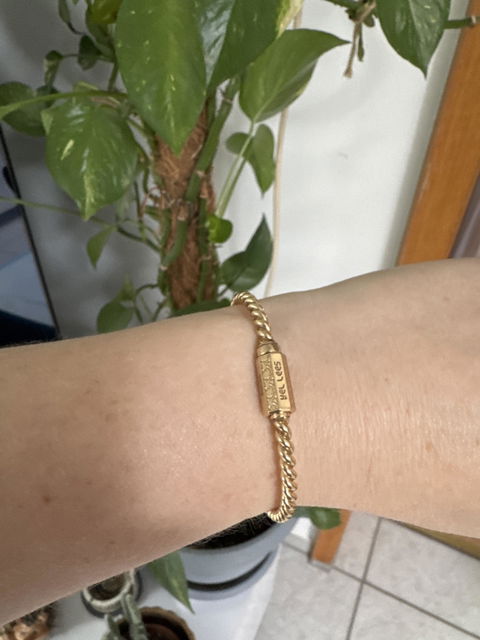
Tensor bracelets
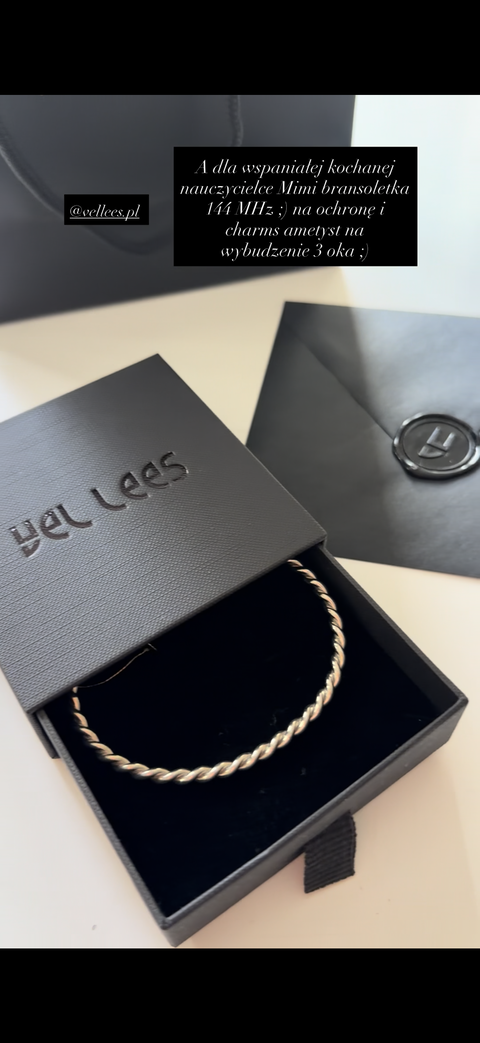
A tensor bracelet is an elongated version of a hoop bracelet, often open or with a built-in clasp, designed to be worn around the wrist or neck. It differs from a hoop bracelet in three ways.
- Constant contact with the field. Wearing it every day is often treated as a conscious gesture of caring for one's own energy field.
- The look of classic jewelry. An accessory for people who look for a symbolic dimension in jewelry without sacrificing elegance.
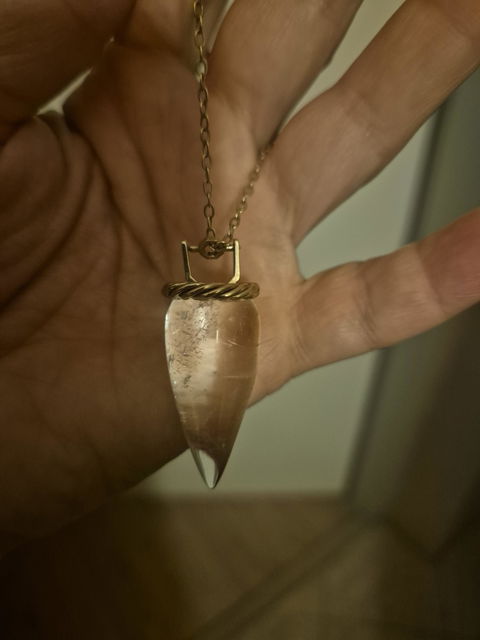
- Personalization. There are variants with semi-precious stones, for example rock crystal or amethyst.
If you want to see how the Royal Cubit proportions and 144 MHz frequency translate into a real product, check out the collection Copper bracelets
The combination of hoops with symbolic jewelry also gave rise to a collection
Where to buy tensor hoops
There are several places, each with different advantages.
- Online stores. Pay attention to descriptions, customer reviews, and information about the manufacturing method and materials used.
- Esoteric shops. In larger cities, you can view and evaluate the rim on site before purchasing.
- Goldsmiths' workshops. Independent jewelers make custom hoops, with the option of choosing a diameter or engraving.
- Handicraft fair. An opportunity to meet the creator and ask questions on the spot.
If you plan to sell your own hoops, remember that hallmarking regulations don't apply to copper. Clearly communicate the product's composition and potential properties.
Are tensor hoops scientifically proven?
They are not scientifically recognized as medical or therapeutic devices. There are no studies conclusively confirming the existence of tensor fields or their impact on health. Information about supporting regeneration, reducing inflammation, or reducing pain should be considered descriptions of subjective experiences.
Despite this, many people report that regular use of the hoop improves their well-being and sleep quality. Tensor technology is therefore primarily used in the field of spiritual and meditation practices, where the hoop is sometimes considered:
- a tool for working with energy and intention,
- element of meditation and mindfulness practices,
- energy conservation symbol,
- an accessory to harmonize space,
- jewelry with spiritual meaning.
Is it worth it?
Opinions are divided. The scientific community views the tensor field concept with caution, while users worldwide describe the benefits: improved mood, sleep, and a calmer mind during meditation.
If you create or sell jewelry, tensor hoops can be an interesting addition to your offerings for customers interested in personal development and meditation. There's one condition: you must be clear about what this technology is and isn't.For those practicing dowsing or working with intention, the hoop is another tool to try. Your own observation will determine the answer.
Frequently asked questions
What are tensor hoops?
These are circles, most often made of copper, formed according to specific proportions and wire twisting rules. In circles related to spirituality, dowsing, and subtle energy, they are considered objects that generate tensor fields.
How do tensor hoops work?
According to proponents of tensor technology, a suitably twisted and closed wire creates a subtle energy field around the rim. This phenomenon is not scientifically proven in the classical sense of physics.
What is a tensor field?
A term used in the context of tensor technology and subtle energy. It refers to the harmonizing energy field that is created around a properly crafted hoop. In some traditions, this is called a torsion field.
Do tensor hoops support health?
Many users report improved well-being, sleep quality, and a sense of harmony. However, the hoops are not medical devices, do not cure, and do not replace medical consultation.
Do the rims have protective properties?
In many spiritual traditions, they are treated as a symbol of energetic protection, understood more as a reminder of one's own intention than as a magical action.
What is the difference between tensor bracelets and hoops?
Bracelets are based on the same idea, but are designed for everyday wear on the wrist or neck. They have a more jewelry-like feel and are sometimes combined with natural stones.
Where to buy well-made rims?
In shops and workshops that transparently describe the method of production, the type of copper used and the method of twisting and connecting the wire.
The content is for informational purposes and pertains to spiritual practices. Tensor rings are not a medical device, do not cure, and do not replace consultation with a physician.