Protective Amulets
Introduction
For thousands of years, people around the world have sought ways to protect themselves from evil, attract prosperity, and ensure happiness in various areas of life. This is why amulets and talismans have accompanied us since time immemorial – whether in the form of a delicate amulet bracelet, a striking amulet necklace, or a modest pendant hidden under clothing. Some are drawn to the vision that such magical jewelry can ward off evil and curses, while others believe it will provide courage in key moments.
In this article, I will try to show you the various faces of amulets. We will take a look at protective amulets and amulets that protect against evil, but we will not forget about those that – according to tradition – are meant to attract luck, money, or support friendship (we are talking about amulets that bring luck and money or friendship amulets). You will learn what a talisman actually is and what an amulet is, as well as where these distinctions come from. There will also be some information about specific types of amulets, such as the mysterious Egyptian amulets or Gypsy lucky amulets.
If you have ever considered wearing such magical jewelry but didn't know where to start or which tradition to choose, this text should provide you with inspiration and practical tips.
Part I: What are amulets and what are talismans?
The concept of an amulet
The word "amulet" comes from the Latin "amuletum" (to protect), which simply explains their main purpose. Protective amulets are designed to protect the owner from all negative energies, evil spells, and even from specific threats such as diseases or accidents.According to tradition, the very shape, materials, and inscriptions can enhance the power of the amulet: sometimes it is a unique sign or symbol, other times – a gemstone or mineral encased in metal.
An extremely popular form is amulets that protect against evil spells – you will find them in almost every culture. Some carry them in their pockets as small objects, others choose a amulet necklace with a subtle design, while yet others opt for visible, massive decorations so that everyone knows about the strength of their protection.
Talismans – the twin cousin of the amulet?
It is often said that amulets and talismans are the same. In reality, there is a subtle, and sometimes deeper, difference. To simplify:
- Amulets are primarily meant to protect (e.g., from evil, spells).
- Talismans add power, luck, or support in achieving goals.
This distinction is not always rigid, as you may encounter protective talismans (yes, the terminology can be confusing!). Much depends on the specific culture and context, so in practice, people use these terms interchangeably. Nevertheless, if someone asks, "What is the difference between amulets and talismans?", the simplest answer is: an amulet is more often associated with protection, while a talisman is associated with attracting good things (though in practice, both functions can overlap).
Part II: Types and Traditions of Amulets Around the World
Egyptian Amulets
Egyptian amulets are among the oldest and most studied forms of magical objects. In ancient times, symbols associated with gods, such as Osiris, Isis, or Horus, played a significant role.
- The Eye of Horus (Udjat) – protects against the evil eye, adds courage and vital strength.
- Ankh – a symbol of life and fertility, also used as an amulet supporting longevity.
Today, such amulets are worn both in the form of a simple pendant and a richly decorated, massive necklace.
Gypsy lucky amulets
The Romani culture has many of its own beliefs and practices, often hidden from outsiders. Gypsy lucky amulets are often associated with coins, pieces of fabric, or jewelry passed down from generation to generation. Since luck in travel and family protection is very important to the Romani, we will encounter many amulets protecting against evil. It is often believed that not only the symbol itself matters, but also the family history and energy passed along with the amulet.
Amulets in Slavic and Other Traditions
If you immerse yourself in the ancient beliefs of the Slavs, you will encounter numerous solar or plant patterns, carved in wood or forged in metal, which were worn as protective amulets. In turn, in Far Eastern cultures, such as in China or Japan, important are amulets in the form of small pouches with images of deities (o-mamori) – they are meant to ensure the safety and prosperity of the owner.
Part III: Amulets Protecting Against Evil and Attracting Good
Amulets Protecting Against Evil Spells
In many communities, especially those with strong folk roots, there is a belief in the "evil eye" – a curse cast by a gaze. The response to this is amulets protecting against evil spells, for example, the famous Turkish "nazar boncuğu" (glass eye), which is often hung above doors, in cars, or worn as a bracelet.In Greece, a similar function is served by the "mati," and in Arab countries, it is protected by the so-called "hamsa" – the hand of Fatima.
Lucky charms and for friendship
For some, instead of protection, the most important thing is to enhance the positive aspects of life. This is where lucky charms, or even charms for luck, often associated with symbols of abundance and success (such as a four-leaf clover, horseshoe, or dreamcatcher) come into play.
If you care about relationships, you might be interested in friendship charms – these are various types of pendants worn by a pair of friends, meant to remind them of their unbreakable bond. Sometimes, they consist of two halves of one design, which when joined together create a complete symbol (though this is more of a marketing interpretation of the "friendship charm," particularly favored by youth and teenagers).
Amulets that bring luck and money
In addition to those that care for relationships, there are also amulets specifically focused on money and prosperity. An example could be a Chinese coin with a red ribbon, and in other cultures, a pouch with grains or a casting of a gold bar engraved with a symbol of good fortune. Nowadays, you will find "Money Amulet" type amulets available for purchase online, which promise fortune... As with everything, it is wise to maintain a reasonable distance, but at the same time – why not try it if you believe in the power of symbolic attraction of financial success?
Part IV: Magical jewelry – bracelets and necklaces
Amulet bracelets
For many years, bracelets have served not only an ornamental role but also a symbolic one. Amulet bracelets are meant to protect the wearer from all negative influences and attract a specific energy.Sometimes a simple string with a natural stone, such as tourmaline, hematite, or rose quartz, is enough. However, if you prefer something more striking, a bracelet with copper elements can look incredibly impressive.
If you have a knack for handicrafts, you can create a similar bracelet yourself by choosing beads that correspond to protection, friendship, or luck. Also, remember that depending on the tradition, bracelets are worn on different hands (right or left), which is believed to influence whether they "absorb" energy or "repel" it.
Amulet necklace
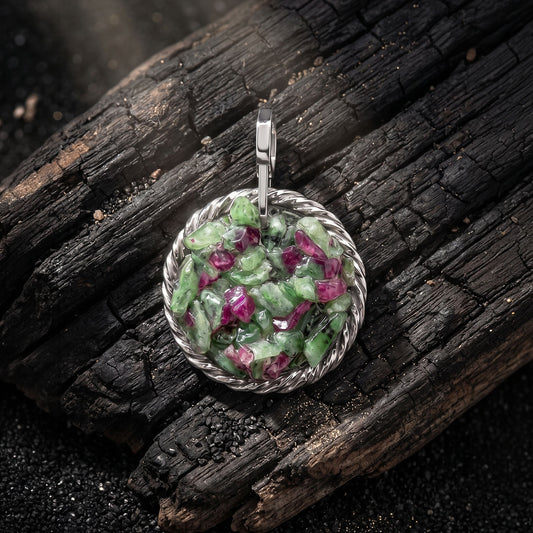
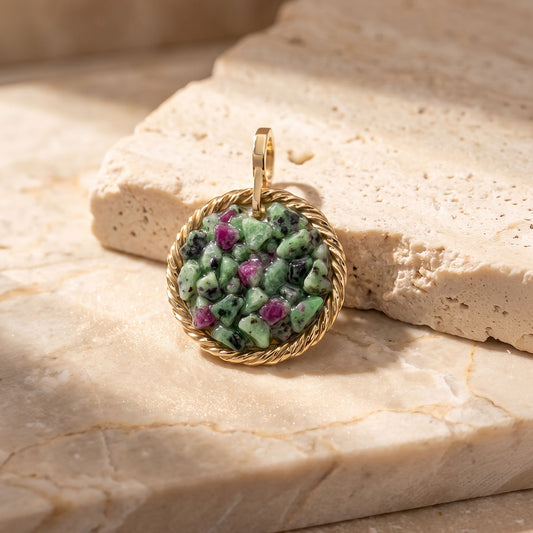
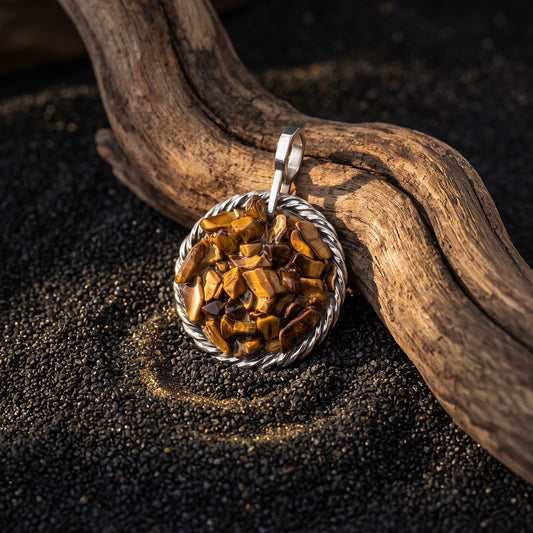
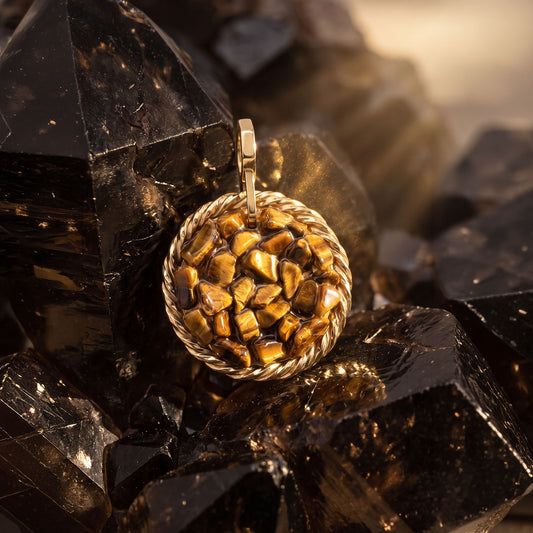
Amulet necklace is an interesting option for those who want to always have a specific symbol with them while treating it as part of their daily styling. It can be a minimalist pendant with engraving, a small crystal, or even combined elements typical of a given culture (e.g., sun and moon, eye motif, wings).
It is important that when creating or ordering such a necklace, you are aware of the symbols and meanings they carry. This way, it will gain much greater power for you and will not remain just a fashionable decoration.
Part V: The Meaning of Amulets and Talismans in Modern Times
We live in times when scientific progress is immense, and the internet offers access to countless pieces of information. So why do we still eagerly reach for amulets that protect us from evil? What attracts us to the idea of wearing a magical necklace or hanging an amulet in our home?
- A Sense of Security – Not always does what is rational win over our deeply rooted fears. Especially in moments of uncertainty, people seek symbolic support.
- Belief in the Power of Symbols – Mass culture, as well as local traditions, are full of stories about how an amulet supposedly helped in a difficult situation.Even if it is a placebo, it can still provide benefits in the emotional sphere.
- Element of identity – For many people, wearing an amulet from a given tradition serves as a connection to their roots, family, and ancestors. It can be an expression of pride in one's culture and history.
Part VI: How to choose (or make) your amulet?
Intention
The most important thing that should guide you when choosing an amulet is sincere intention. Consider: what do I need? Protection from negative thoughts, or perhaps support in business (finances)? Or maybe values related to friendship? The answer to this question will help you decide whether you are looking for amulets that protect against evil, or rather those focused on attracting luck and money.
Material and symbolism
If you decide to make the amulet yourself, choose a material that attracts you.It can be metal (silver, copper, gold), wood, or semi-precious stone. By the way, if you are using silver or gold, remember the assay requirements – when creating jewelry, it is worth being aware of the fineness and any assay mark if you plan to sell your creations.
Charging Ritual
Many traditions recommend "charging" your amulet with your energy before its first use. This can simply be a moment of concentration, cleansing it in incense smoke, or exposing it to moonlight. It is about the symbolic "connection" of the object with you and your intention.
Part VII: Amulets and the Jewelry World
In the jewelry industry, we increasingly encounter the term magical jewelry. Creators, noticing the growing interest in spirituality and esotericism, are creating limited collections of pendants, bracelets, or rings with engraved protective symbols.The combination of aesthetics and symbolism can be a successful idea for a unique offering.
Such decorations are often referred to as amulet bracelets or protective talismans, and customers buy them not only for their beautiful design but also for the belief that they carry a certain positive energy.
Part VIII: Controversies and a Rational Approach
Skeptics
There are voices that consider amulets solely as superstitions and ordinary decorations. They raise the argument that positive effects result from the so-called placebo effect (i.e., if you believe that something protects you, you become more confident, and thus cope better in life).
Personal Experience
On the other hand, supporters and those who have been wearing protective amulets or good luck charms, for years often speak of real support, calmness, and a sense of security.Even if it is a placebo, it can still serve its purpose by providing comfort in difficult moments.
Part IX: Summary – what do amulets mean to us today?
Protective amulets, protective talismans, lucky amulets or friendship amulets – regardless of the name, they serve not only as a memento of our ancestors' beliefs but also as a way to express one's own spirituality and cultural belonging. Increasingly, they are also a stylish addition to everyday wardrobe that carries a deeper message.
In an era where the fast pace of life and stress can be overwhelming, a little faith in the power of a symbolic object can bring immense relief.Whether in the form of a small bracelet on the wrist or as a large, richly decorated necklace – amulets allow us to feel that we still have an influence on our fate, or at least – that we are not alone in all of this.
Conclusion
The world of amulets and talismans is incredibly rich, and each of us can draw from it what speaks to us the most. It may be about amulets protecting against evil spells, or amulets bringing luck and money, or perhaps simple friendship amulets symbolizing a deep bond with another person. The variety of forms, symbols, and materials is so great that everyone will find something for themselves – or create their own version of what is meant to bring them prosperity and peace.
If you create or plan to create magical jewelry, remember that the key to success is not only aesthetics but also intention. Your customers will surely sense and appreciate this.And if you are just curious whether amulets really work – there is nothing stopping you from trying it for yourself. In the worst case – you will gain an original decoration, and in the best case – invaluable support in your daily life.
Good luck in discovering this fascinating land of symbols and belief in the invisible!